
Download the app


© 2026. The Purpl Co Limited. All rights reserved.


Download the app
© 2026. The Purpl Co Limited. All rights reserved.
8 min read
Written by
Georgina, Founder of Purpl
Published on
July 8, 2026
Published on: 08 July 2026
Applies to: UK
Written by: Georgina, Founder of Purpl
Accessible transport is not a “nice to have”. A new Institution of Mechanical Engineers report estimates that a fully accessible transport network could boost the UK economy by £176.4 billion every year. Transport barriers currently lock around 2.8 million disabled people out of work or leave them underemployed, while also stopping disabled households from spending on high streets, hospitality, tourism and days out.
For decades, transport accessibility for disabled people has been treated by successive UK governments as a secondary social welfare issue. It is too often viewed as an expensive extra, or a compliance box to tick only when the budget allows.
But a landmark report released this week by the Institution of Mechanical Engineers has shattered that narrative.
The data shows that inaccessible trains, buses, stations, airports and coach networks are not just social failures. They are a multi-billion-pound economic blunder holding back national growth.
At Purpl, we know disabled people face an unseen burden of extra costs just to access the same travel experiences as everyone else. This report proves something the disabled community has said for years: when you lock disabled people out of transport, you lock billions of pounds out of the UK economy.
It is time to stop treating accessibility as an act of charity.
It is a national economic priority.
Need help reducing the extra costs of disability? Purpl helps disabled people, people with long term health conditions, carers and families access discounts that can make everyday costs more manageable. If travel, transport, mobility aids, holidays, days out or daily living costs affect your budget, you can explore the latest Purpl discounts and savings at https://www.purpldiscounts.com/.
The reality of a failing transport network
How transport barriers lock disabled people out of work
Why accessible transport is a financial no-brainer
Unlocking the Purple Pound on the high street
How Purpl members can reduce the disability travel premium now
Frequently Asked Questions (FAQs) about Accessible Transport
In summary
To understand why the economic loss is so massive, we have to look at the day-to-day structural failures across our transit networks. Accessibility isn’t just about putting a single ramp on a bus; it is about an entire ecosystem of travel that is currently broken.
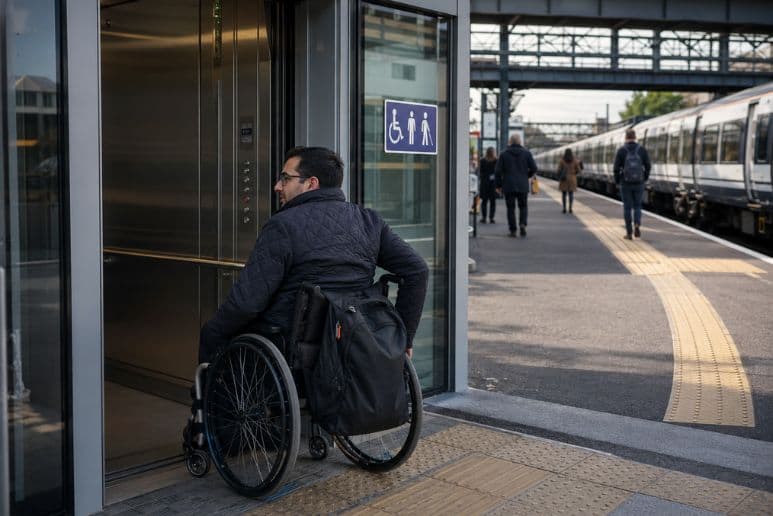
On the rail network, hundreds of stations across the UK still lack step-free access, meaning disabled passengers frequently have to travel miles out of their way just to find a station with a working lift.
Unannounced platform changes leave wheelchair users stranded with no way to cross tracks, while a lack of tactile paving puts visually impaired passengers in physical danger.
In aviation and coach travel, rigid seating layouts and a lack of secure storage for complex mobility aids mean expensive, specialised equipment is routinely damaged in transit.
When public infrastructure fails, disabled people are often forced to rely on private adapted vehicles out of pure necessity.
Related guide: If you are weighing up your transport options after leaving the vehicle leasing scheme, check out our deep dive into Life After Motability: Private Adapted Car Ownership to see how to budget for your own independent transport.
Transport infrastructure acts as a physical gatekeeper to the economy. If disabled people cannot travel reliably, they cannot access work reliably either.
The IMechE report places employment at the centre of the accessible transport argument. That matters because inaccessible transport does not just affect whether someone can enjoy a day out. It affects whether they can accept a job, keep a job, progress in a career or work the hours they are capable of working.
The numbers are stark.
Almost half of disabled professionals, 45%, have been forced to turn down a job offer or career advancement opportunity because transport was inaccessible or unusable.
Around 2.8 million disabled people are currently locked out of the workforce or underemployed because of transport barriers.
According to the report, the average UK worker contributes roughly £63,000 each year to national economic output. By failing to provide accessible transport, the UK is missing out on a potential £176.4 billion annual boost to GDP.
That figure should stop every policymaker in their tracks.
A diagnosis or condition is not what stops many disabled people from working. The barrier is often the system around them.
A person may be able to do the job. They may have the skills, experience and ambition. But if the station has no lift, the bus is unreliable, the pavement route is unsafe, or the train company cannot guarantee assistance, that job becomes impossible before they even reach the workplace.
Accessible transport is not a charitable luxury.
It is an economic growth strategy.
Purpl Insight: A diagnosis or condition isn’t what stops most disabled professionals from working; it is the systemic failure of the infrastructure around them. Accessible transport isn’t a charitable luxury – it is an economic growth strategy.
The financial case for accessible transport becomes impossible to ignore when you compare the cost of fixing the network with the annual return it could create.
According to the IMechE report, the total infrastructure spend needed to make the entire UK rail network fully step-free and accessible is estimated at between £20 billion and £24 billion.
That sounds like a large figure until you compare it with the potential return.
A one-off investment of £20 billion to £24 billion could help unlock £176.4 billion in annual workforce value.
It could also support an additional £22.3 billion in annual consumer spending across high streets, hospitality and domestic tourism.
The report also estimates that transport operators could gain between £10 billion and £34 billion in extra annual ticket revenue due to increased passenger numbers.
Put simply, the UK is avoiding a one-off infrastructure cost while losing far more money every single year.
That is not careful budgeting.
That is a severe economic oversight.
Accessible transport does not only affect employment. It affects how disabled people spend money, where they spend it, and whether they can spend it at all.
The Purple Pound, which refers to the spending power of disabled people and their households, is estimated to be worth over £274 billion a year in the UK.
Yet businesses continue to lose out because disabled consumers cannot physically get to them.
If a disabled person cannot trust the train, they may not book the theatre tickets. Likewise, if a wheelchair user cannot guarantee step-free access, they may not visit the shopping centre. If someone with fatigue cannot manage multiple transport changes – they may not book the day out, the hotel stay or the weekend trip.
This is not lack of demand.
It is blocked demand.
The IMechE report suggests that closing public transport gaps could add £22.3 billion a year to high streets, hospitality and domestic leisure.
That is money waiting to be spent.
When transport is reliable, disabled people and their families can take more trips, visit more places, book more days out, eat out more often and support more local businesses. They can make plans without the constant fear of being stranded by a broken lift, a missing ramp or assistance that never arrives.
If the government is serious about economic growth, accessibility cannot sit at the bottom of the infrastructure list.
It belongs at the top.
Related guide: If you are trying to fund a much-needed break, read Purpl’s guide to disabled holiday grants in the UK: https://www.purpldiscounts.com/blog/disabled-holiday-grants-uk
While the engineering and policy sectors debate these numbers, disabled people still have to face the daily physical and financial realities of an inaccessible network.
Until the government prioritises this economic engine, here is how you can use Purpl’s verified offers to offset the “disability tax” and protect your wallet:
Purpl Tip: Treat Passenger Assist failures as a legal issue, not just an inconvenience. Document the time, the station, and the operator. Claiming your rightful compensation holds operators accountable and forces them to see accessibility as a financial priority.
The IMechE report estimates that fully accessible transport could boost the UK economy by £176.4 billion a year by helping disabled people access work, spend more in local economies and travel more freely.
The report estimates that around 2.8 million disabled people are locked out of the workforce or underemployed because of transport barriers.
The IMechE report estimates that making the entire UK rail network fully step-free and accessible would cost between £20 billion and £24 billion.
Accessible transport affects whether disabled people can work, spend money, visit high streets, travel domestically, attend appointments and take part in daily life. When transport is inaccessible, the whole economy loses out.
The Purple Pound refers to the spending power of disabled people and their households. In the UK, it is commonly estimated to be worth over £274 billion a year.
If a rail operator fails to provide booked assistance, you should complain and request redress. Keep records of your booking, what happened, where it happened and how it affected your journey.
TUI provides assisted travel support and accessibility information for disabled travellers. You should contact TUI before booking if you need specific access arrangements, mobility support, transfers or accessible room details.
Purpl members can access disability discounts across travel, transport, mobility aids, holidays, attractions, insurance and everyday essentials. These savings cannot fix inaccessible infrastructure, but they can help reduce some of the extra costs disabled people face.
Accessible transport is not a side issue. It is an economic emergency.
The UK is losing billions because disabled people cannot reliably access work, high streets, hospitality, tourism, education, healthcare and daily life.
The IMechE report makes the financial case impossible to ignore. Spending £20 billion to £24 billion to make the rail network fully accessible could help unlock £176.4 billion a year in workforce value alone.
That is not charity.
That is common sense.
Until the system changes, disabled people will keep paying the price in money, time, energy and missed opportunities. At Purpl, we will continue to campaign for better access while helping our members reduce the extra costs they face right now.
Georgina is the Founder of Purpl, a specialist UK discount platform built to help disabled people, people with long term health conditions and carers reduce the disability price tag.
Georgina lives with Multiple Sclerosis herself, so this work is personal. She uses lived experience to create open, honest and jargon-free guidance.
Her aim is to help the community understand their rights and reduce daily costs. She also wants to make complex systems feel easier to navigate.
How to apply for a disabled railcard: https://www.purpldiscounts.com/blog/how-to-apply-for-disabled-persons-railcard
Disabled holiday grants in the UK: https://www.purpldiscounts.com/blog/disabled-holiday-grants-uk
Supermarket discounts for people with disabilities: https://www.purpldiscounts.com/supermarket-disability-discount
Disability aids and healthcare discounts: https://www.purpldiscounts.com/category/disability-aids
Free carer entry in the UK: https://www.purpldiscounts.com/blog/free-carer-entry-uk-companion-tickets-disability-card