
Download the app


© 2026. The Purpl Co Limited. All rights reserved.


Download the app
© 2026. The Purpl Co Limited. All rights reserved.
11 min read
Written by
Georgina, Founder of Purpl
Published on
May 14, 2026
Last reviewed: 14 May 2026
Applies to: UK
Written by: Georgina, Founder of Purpl
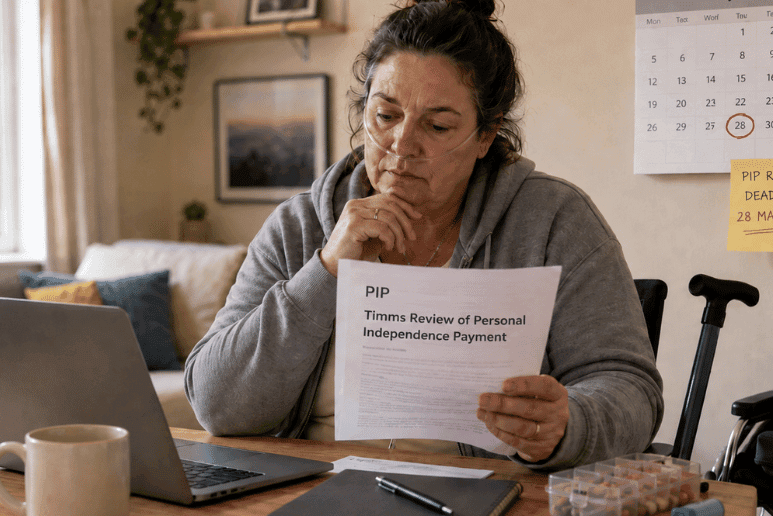
Disabled people, people with long term health conditions, parents and carers have until 11:59pm on 28 May 2026 to respond to the government’s PIP review call for evidence. This is not your personal PIP reassessment, and it will not replace an individual award review. It is a wider review of the Personal Independence Payment system, and it is asking people to share what PIP is really like in everyday life, including what it helps with, what feels unfair, and what needs to change.

At Purpl, we know PIP is not just a benefit on paper. It can be the difference between getting to appointments, heating your home, paying for support, using accessible transport, or keeping a little more independence. That is why this deadline matters. If you have lived experience of PIP, or you support someone who does, your voice deserves to be part of this review.
To make this easier, we have created free template letters that you can copy, edit and use when responding to the review. You can download the full PIP Review template letter, the shorter PIP Review template letter, or the very short copy and paste PIP Review letter. You can also download all three PIP Review template letters together.
The review is being led through the Timms Review of PIP, and the government has said evidence submitted will be shared with the steering group to help inform its recommendations. The review is expected to report to the Secretary of State for Work and Pensions in autumn 2026.
If you want help understanding PIP, disability benefits, grants, support and money saving options, you can also read Purpl’s UK Disability Benefits and Support Handbook.
The PIP review, officially called the Timms Review of Personal Independence Payment, is looking at how PIP works and whether it is fair, clear and suitable for the future.
Personal Independence Payment can help with the extra costs of living with a long term physical or mental health condition or disability. It is based on how your condition affects daily living and mobility, not on your income or savings. GOV.UK explains that PIP can be paid whether someone is working or not, while Scope also confirms that earnings, other income and savings do not affect PIP entitlement.
The review is looking at big questions, such as:
This is why lived experience matters so much. A policy review can look very different depending on whether it is built around budgets, forms and statistics, or around real disabled people trying to live, work, rest, parent, study, travel and manage daily life.
Purpl Insight: The PIP review needs more than data. It needs real examples of how disability affects money, time, energy, safety, independence and dignity.
For many disabled people and people with long term health conditions, PIP helps cover the costs that other people may never have to think about. That might mean taxis when public transport is inaccessible, extra heating, support with care, replacement clothing and bedding, specialist food, mobility aids, sensory items, appointment travel, phone calls, admin time, or help to reduce isolation.
It can also help with the hidden cost of disability. Pain, fatigue, anxiety, brain fog, sensory overload and fluctuating symptoms can all make everyday life more expensive and harder to manage.
This review matters because decisions about PIP affect people’s real lives. If the review hears mainly from people who do not rely on PIP, it may miss the reality of what the benefit does, and what happens when the system gets it wrong.
It also matters because the claiming process itself can be exhausting. Some people find the forms overwhelming. Some feel their condition is misunderstood. Some struggle to explain variable symptoms. Some need help from a family member, carer, adviser or charity just to get through the process.
Purpl Tip: When you respond, try to explain what PIP means in an ordinary week. Real examples are powerful because they show the gap between what a form asks and what disabled life actually looks like.
Why the 28 May 2026 deadline is urgent
The deadline is urgent because the call for evidence closes at 11:59pm on 28 May 2026. Once it closes, the review team will move into the next stage of considering the evidence and developing recommendations.
That means this is a time limited opportunity. If disabled people, people with long term health conditions, parents and carers want their experiences to be part of the evidence base, they need to respond before the deadline.
You do not need to write a long response. You do not need to answer every question. You do not need to write in formal policy language. A short, honest response can still be useful if it explains what you want the review to understand.
For example, you could write about:
- what PIP helps you pay for
- what you would lose without it
- what the assessment process felt like
- whether your condition was understood
- what costs are missed
- how the system affects carers and families
- what would make PIP fairer and more accessible
Purpl Tip: If your energy is limited, focus on the one thing you most want the review to understand. One clear example is better than trying to write everything and running out of capacity.
You should consider responding if you are:
You do not need a perfect story. You do not need to be an expert. You do not need to prove your whole claim again. The review is asking for evidence, and lived experience is evidence.
People who found the system too stressful to claim should not count themselves out either. If the process stopped you from applying, that is important evidence too.
Purpl Insight: A benefits system can only be fair if it listens to the people who use it, and also to the people who were shut out before they could even apply.
Start with what you know. You could write about your own experience, someone you care for, or patterns you see through your work or community.
You might want to include:
Try to be specific. Instead of writing:
“PIP helps with transport.”
You could write:
“PIP helps me pay for taxis to medical appointments because pain and fatigue mean I cannot always use public transport safely.”
Instead of writing:
“The assessment was stressful.”
You could write:
“The assessment made me anxious for weeks because I had to explain personal care needs to a stranger, and I felt the questions did not reflect how my condition changes from day to day.”
You can also talk about what would happen if your PIP was reduced or removed. Would you miss appointments? Lose independence? Rely more on family? Stop going out? Struggle to heat your home? Have to choose between food, transport and support?
Purpl Tip: The best responses often use plain language. You do not have to sound official. You just need to be clear about what happens in real life.
Free PIP Review template letters you can use
We know responding to a government review can feel overwhelming, especially if you are dealing with pain, fatigue, brain fog, anxiety, caring responsibilities, trauma from previous assessments, or very limited energy.
That is why we have created free PIP Review template letters that you can copy, edit and use for the Timms Review of Personal Independence Payment.
You do not need to use every word. You can delete anything that does not apply, add your own examples, and keep your response as short or detailed as you need.
Choose the version that feels easiest for you:
- Download the full PIP Review letter template if you want more structure and prompts.
- Download the shorter PIP Review letter template if you want something easier to fill in.
- Download the quick copy and paste PIP letter template if you have limited time or energy.
You can copy your finished letter into the official online form, email it to the review team if needed, or post it to the address below.
You can respond through the official GOV.UK online form. If needed, you can email your response to [email protected]. British Sign Language video responses can be sent to [email protected].
Or post:
The Timms Review
Disability and Health Strategy Directorate
Department for Work and Pensions
Floor Two
Caxton House
London,
SW1H 9NAGOV.UK also says people should not include personal or financial information, such as National Insurance numbers or credit card details.
Purpl Tip: If you feel overwhelmed, start with the shortest version. One honest paragraph about your lived experience can still be valuable evidence.
The easiest way for many people will be the online form linked from the official call for evidence page. The government has said people can also respond anonymously through the online form.
There are other options too. The call for evidence includes ways to respond by email or post, and accessible formats are available, including Easy Read, British Sign Language, audio, large print and Welsh versions.
It may help to:
If you are responding on behalf of an organisation, you may want to include evidence from casework, surveys, helplines, support groups, appeals, tribunals, member feedback or community research.
If you are responding as an individual, your lived experience is enough.
Try to save a copy of your response. You could write it in Notes, Word, Google Docs, an email draft, or a voice note first. This helps if the form times out or you need a break.
You can keep it short. You could answer only the questions that matter most to you. You could ask someone you trust to help you organise your thoughts. You could also use bullet points if writing full paragraphs feels too much.
Purpl Tip: Do not leave it until the final evening if you can avoid it. Fatigue, pain, caring responsibilities, appointments, brain fog and technology issues can all make last minute deadlines harder.
Parents and carers often see the parts of disability that systems miss. They may support with forms, medication, appointments, travel, communication, personal care, night time needs, meltdowns, sensory overload, admin, appeals, phone calls and emotional support.
That unpaid work has value. It also has a cost.
A parent might explain how disability affects the whole household. A carer might explain how much time goes into support that is not visible in an assessment. A partner might explain what happens on the days someone cannot cook, wash, travel, communicate or leave the house safely.
Carers should not speak over disabled people, but they can add important evidence, especially where the disabled person wants support to share their experience.
Purpl Insight: Carer evidence can help show the hidden work behind a PIP claim, but the disabled person’s voice, wishes and dignity should stay at the centre wherever possible.
PIP rules are not identical across the UK. In Scotland, Adult Disability Payment has replaced PIP for many working age disabled adults, and it is delivered by Social Security Scotland. In Northern Ireland, PIP is administered separately through Northern Ireland’s benefit system.
That does not mean your experience is irrelevant. If you have experience of PIP, moving from PIP to Adult Disability Payment, supporting someone through the system, or seeing how different disability benefit systems work, your evidence may still help show what disabled people need from fair support.
Purpl Tip: If you are unsure whether the review applies to your exact situation, you can still read the call for evidence and decide whether your experience could help answer the questions being asked.
The PIP review 2026 is called the Timms Review of Personal Independence Payment. It is looking at how PIP works, whether it is fair, and whether the system needs to change for the future.
The deadline is 11:59pm on 28 May 2026. Responses need to be submitted before the call for evidence closes.
No. The Timms Review is about the wider PIP system. It is not the same as your personal PIP award review or reassessment. If DWP has sent you a letter about your own claim, follow the deadline and instructions in that letter.
No. You can respond if you have relevant experience or evidence. This could include being a current claimant, previous claimant, carer, parent, adviser, support worker, charity, organisation or someone who did not apply because the process felt inaccessible.
Yes. The official call for evidence says people can submit anonymously through the online form.
Include real examples. You could explain what PIP helps you pay for, what extra costs you face, what the claiming process felt like, whether your condition was understood, and what you think should change.
You can respond through the official GOV.UK online form. If needed, you can email your response to [email protected]. British Sign Language video responses can be sent to [email protected]. Or post: The Timms Review, Disability and Health Strategy Directorate, Department for Work and Pensions, Floor Two, Caxton House, London, SW1H 9NA
GOV.UK also says people should not include personal or financial information, such as National Insurance numbers or credit card details.
Yes. Carers, parents and family members can respond, especially if they have experience supporting someone through PIP or seeing how disability affects daily life, costs, independence and care needs.
The call for evidence is about the wider PIP system, not individual award decisions. You can respond anonymously if you do not want to share your name. Avoid including unnecessary personal or financial information.
Disabled people should respond because the review needs to understand what PIP means in real life. Lived experience can show how the system affects independence, safety, care, transport, mental health, family life, work, study and the extra costs of disability.
Disabled people, people with long term health conditions, parents and carers should respond to the PIP review before 11:59pm on 28 May 2026 because this is a rare opportunity to help shape the evidence behind future recommendations.
This is not about writing a perfect policy response. It is about explaining the reality.
What does PIP help you do? What costs does it cover? What does the system misunderstand? What makes the process harder than it needs to be? What would make it fairer?
If you do not know where to start, you can use one of Purpl’s free template letters:
Your experience matters because PIP decisions are not abstract. They affect people’s homes, routines, health, families, independence and dignity.
If you only have energy for a short response, send a short response. If you need help, ask someone you trust. If you want to stay anonymous, use that option. The most important thing is that disabled people are heard before the deadline.
Georgina is the Founder of Purpl, a disabled led platform created to help disabled people and people with long term health conditions save money on everyday costs.
Georgina lives with MS and ADHD, and created Purpl after seeing how expensive life can become when you are disabled. Purpl’s mission is to make life more affordable, accessible and equal through disability discounts, practical guides, benefits information and community support.
Disability benefit reviews extended: what this means for claimants
PIP Changes Are Long Overdue: Why the System Needs a Radical Overhaul
PIP reassessments moving to every 5 years – but what’s the catch?
PIP rejected? What to do next: step-by-step UK guide