
Download the app


© 2026. The Purpl Co Limited. All rights reserved.


Download the app
© 2026. The Purpl Co Limited. All rights reserved.
6 min read
Written by
Georgina, Founder of Purpl
Published on
March 13, 2026
Last reviewed: 13 March 2026
Applies to: UK
Written by: Georgina (Purpl) and Designability
Everyday life still contains barriers that many people never notice.
Millions of disabled people, parents of disabled children and unpaid carers face these barriers every day because many environments, products and services fail to consider their needs. As a result, routine activities can become harder, more expensive and more exhausting.
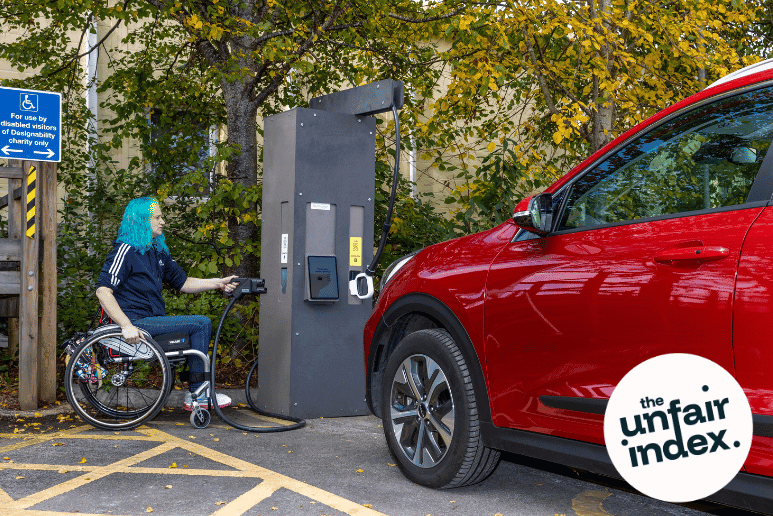
A new UK research project called The Unfair Index: Designing a Fairer Future lead by innovation charity Designability. The project will focus on collecting experiences from disabled people across the UK, with the aim of identifying where everyday design fails and where improvements are most urgently needed.
When disabled people share their lived experiences through this research, they help shape future products, services and environments so they work better for everyone.
If you live with a disability, have a long term health condition, or care for someone who does, your voice can influence how organisations design the world around us.
The world is still largely designed around an assumption of a “standard” user.
For disabled people, this often means environments, services and products do not properly account for mobility needs, sensory differences, neurodiversity or long term health conditions. These gaps in design can affect everything from transport and buildings to digital services and everyday household products.
According to disability charity Scope, disabled households face significantly higher living costs because everyday life often requires additional equipment, services or adaptations (https://www.scope.org.uk/campaigns/disability-price-tag).
Barriers can appear in many areas of daily life, including:
When products and environments are designed without disabled people involved in the process, they can unintentionally exclude the very people who need them most.
Purpl Insight: Many accessibility problems are not caused by disability itself but by design decisions that fail to consider how people with different needs use the world.
Designability is a UK innovation charity that works to advance inclusive design and independence for disabled people.
The organisation collaborates directly with disabled people to identify real everyday barriers and turn lived experiences into practical solutions.
For the past six months, they have been developing a new UK research project called The Unfair Index, that aims to build a clearer national picture of where disabled people encounter unfair barriers in everyday life.
Through the UK survey, Designability is asking disabled people, parents and unpaid carers to share their experiences with:
The results will then be used to create an “index” of everyday unfairness. This will help businesses, designers and organisations understand where inclusive design improvements could make the biggest difference.
Many organisations want to improve accessibility but do not always know where to start. The Unfair Index is designed to help them prioritise the areas where change is most urgently needed.
Purpl Tip: If you have ever thought “why wasn’t this designed with people like me in mind?”, your experience is exactly the kind of insight this research needs.
The team behind The Unfair Index worked with a group of Lived Experience Advisors to co-create the project. These advisors understand the barriers disabled people face because they encounter them in everyday life.
One advisor, Kate, cares for three of her five children and regularly encounters environments that fail to consider the needs of neurodiverse families.
She explains:
“We come across things on a daily basis that are unfair, for example finding places that aren’t too overwhelming for my neurodiverse children, finding places to change my child who needs safe places to be changed, and affording all the extra equipment that comes with a disability price tag.”
She also highlights how important it is for carers and parents to speak up when children or vulnerable people may not always be able to advocate for themselves.
“I feel that I have a voice that I can give to them as they can’t always share these things, so I’m going to be doing it on their behalf by taking time to fill in this survey.”
Listening directly to people with lived experience is widely recognised as essential for creating inclusive design. The UK Government has also highlighted the importance of involving disabled people in decisions that affect accessibility and inclusion (https://www.gov.uk/government/publications/disability-action-plan/disability-action-plan).
Purpl Insight: Some of the most powerful improvements in accessibility happen when organisations stop designing for disabled people and start designing with them.
Designability has been following the principles of inclusive design since 1968.
Over nearly six decades, the charity has developed products and innovations that have improved everyday independence for more than 300,000 people.
But meaningful change can only happen when organisations understand the real barriers disabled people face in everyday life.
That is why The Unfair Index relies on people sharing their experiences.
If enough people contribute, the research will give organisations across the UK a clearer roadmap for creating:
At Purpl, we know that the cost of disability is not just financial. It is also about time, energy, independence and dignity.
Helping shape better design is one way to reduce those hidden barriers.
You can take part in the research here:
https://designability.org.uk/unfair-index
Purpl Tip: If you have ever struggled with something that others take for granted, your experience could help prevent the same barrier for someone else in the future.
The Unfair Index is a UK research project led by Designability that aims to identify the everyday barriers disabled people face in products, services and environments. The findings will help organisations prioritise improvements in inclusive design.
Disabled people, people living with long term health conditions, parents of disabled children and unpaid carers across the UK are all encouraged to take part.
Inclusive design ensures products, services and environments are created in ways that work for as many people as possible. When disabled people are included in design processes, barriers can often be removed before they occur.
Research like this helps organisations understand real barriers faced by disabled people. This evidence can guide better design decisions and influence policy, services and product development.
Yes. Research by Scope shows disabled households face significantly higher living costs due to the need for additional equipment, services and support (https://www.scope.org.uk/campaigns/disability-price-tag).
The world still contains many barriers for disabled people because it was not originally designed with everyone in mind.
The Unfair Index: Designing a Fairer Future aims to change that by gathering real experiences from disabled people, parents and carers across the UK.
By sharing those experiences, people can help designers, organisations and businesses understand where everyday life needs to change.
Better design can mean greater independence, fewer barriers and a fairer society.
And it all starts by listening to the people who live with those barriers every day.
This article was written collaboratively by Purpl and Designability.
Purpl is a platform created by disabled people to help people living with disabilities and long term health conditions save money through exclusive discounts, practical guides and financial support information. Founded by Georgina, Purpl focuses on raising awareness of the extra costs of disability and helping people access the support available.
Designability is a UK innovation charity dedicated to inclusive design. Since 1968, they have worked alongside disabled people to identify everyday barriers and develop practical solutions that improve independence and accessibility for hundreds of thousands of people across the UK.
Together, Purpl and Designability are supporting The Unfair Index: Designing a Fairer Future, helping ensure the voices and lived experiences of disabled people, parents and carers shape the design of future products, services and environments.
Other articles, or links, you might find useful:
Intotum – Adaptive Clothing that Fits the Lives of Disabled People
What are the Challenges Faced by People with Disabilities?
Disability Callipers: Enhancing Mobility and Independence
How to Choose the Right Disability Aid & What Grants Are Available
Asking for Reasonable Adjustments at Work: Tips, Template & Resources