
Download the app


© 2026. The Purpl Co Limited. All rights reserved.


Download the app
© 2026. The Purpl Co Limited. All rights reserved.
4 min read
Written by
Georgina, Founder of Purpl
Published on
May 4, 2026
Last reviewed: 4 May 2026
Applies to: UK
Written by: Georgina, Founder of Purpl
Travelling with a disability in the UK is possible, but it often takes more planning, more time, and more money than people expect.
If you receive Personal Independence Payment (PIP), have a Blue Badge, or need support when travelling, there are systems in place to help. The challenge is that they are not always consistent, clearly explained, or easy to navigate.
At Purpl, we talk a lot about the disability price tag. Travel is one of the clearest examples of it in real life, from airport parking to transport and insurance. This guide explains your rights, what support exists, and how to reduce costs where possible.
For many disabled people, travel is not spontaneous.
It often involves:
Scope highlights that disabled households face significantly higher living costs, which makes travel harder to afford (https://www.scope.org.uk/campaigns/extra-costs/).
Many people say the most stressful part is not the flight itself. It is everything around it.
Purpl Insight: Travel becomes more complex when accessibility, affordability and uncertainty all combine. That is the reality for many disabled people.
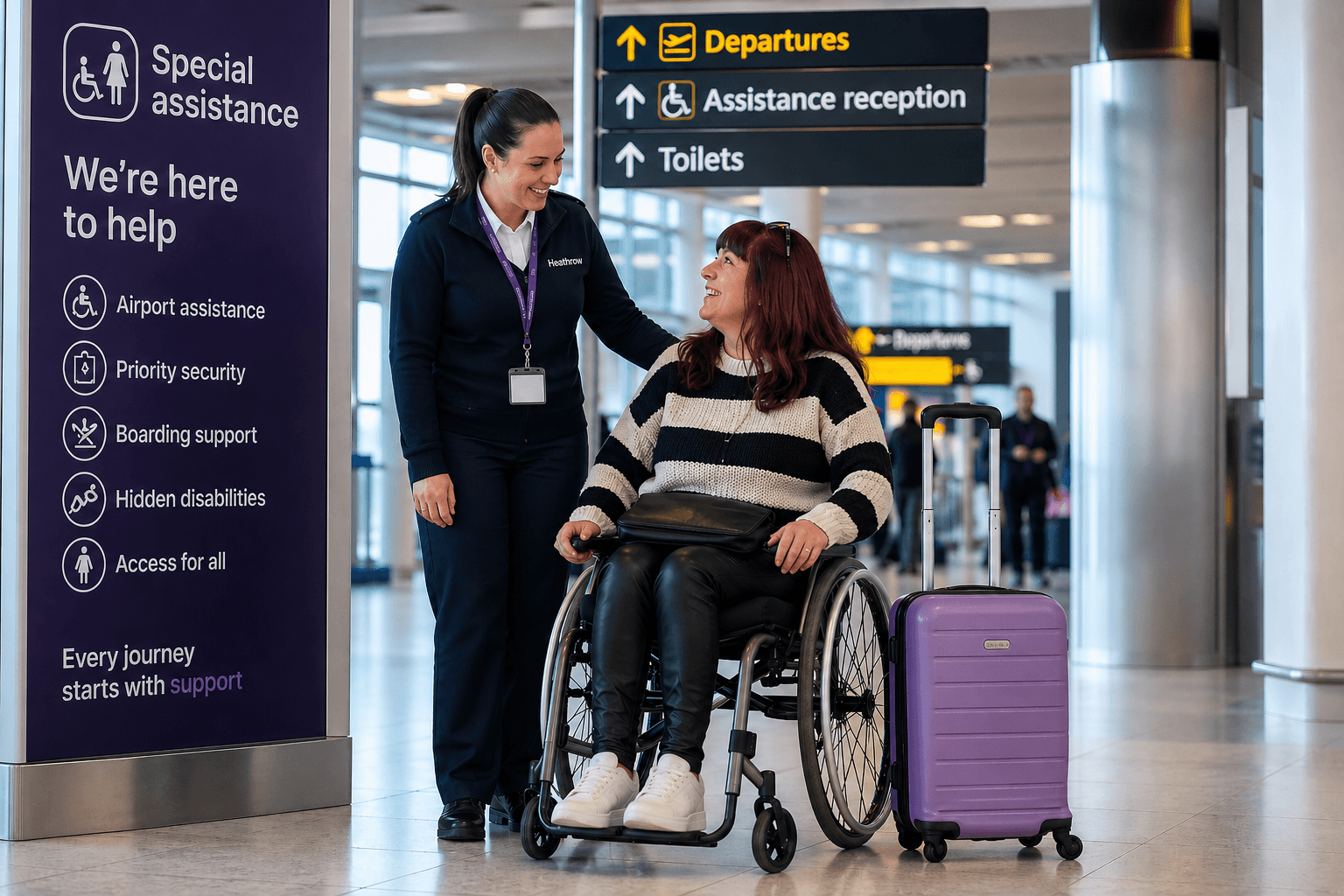
If you are disabled or have a long term health condition, you have legal rights when flying from UK airports.
The UK Civil Aviation Authority states that airports and airlines must provide free assistance, including:
You should request this support at least 48 hours before travel.
In most cases, yes. Airlines usually offer priority boarding to passengers who need extra time or assistance.
Not always. While it is a legal right, delays and inconsistencies can happen. Confirming your support ahead of time helps reduce stress.
Purpl Tip: Book assistance as early as possible and reconfirm before your travel date.
Airport parking is one of the biggest areas of confusion.
Airports operate on private land, so standard Blue Badge rules do not automatically apply.
This means:
No. Some airports offer concessions, but most charge standard rates.
Sometimes. Some airports offer exemptions, but many still charge fees.
Purpl Insight: Airport parking works differently from everyday Blue Badge use. Always check in advance.
Personal Independence Payment helps cover the extra costs of living with a disability.
This includes:
PIP is not means tested and is based on how your condition affects daily life (https://www.gov.uk/pip).
Citizens Advice confirms that eligibility depends on your needs rather than income (https://www.citizensadvice.org.uk/benefits/sick-or-disabled-people-and-carers/pip/).
If you receive enhanced mobility, you may qualify for:
Purpl Tip: Plan travel costs alongside your PIP. Accessibility often increases overall spending.
Travel often costs more when you are disabled. Not because of luxury, but because of necessity.
Common extra costs include:
These costs are often invisible, but they add up quickly.
This is the disability price tag in action.
Purpl Insight: Disabled people often pay more just to access the same experiences. Travel is one of the clearest examples.
Some costs are unavoidable, but there are ways to make travel more affordable.
Purpl Insight: Saving money on travel is about making accessibility more manageable, not cutting corners.
Purpl Tip: The more you plan ahead, the more control you have on the day.
Yes. Airports and airlines must provide free assistance if requested in advance.
No. Airports set their own rules because they are private land.
Yes. PIP can be used for transport, parking and accessibility needs.
You can request it when booking your flight or by contacting the airline or airport at least 48 hours before travel.
Sometimes, but not always. Discounts vary by airport.
Yes. Airlines must allow it, but you should notify them in advance.
Travelling with a disability is absolutely possible. It just requires more planning, more awareness, and often more cost.
Understanding your rights, checking policies in advance, and using support like PIP can make a big difference.
At Purpl, we believe travel should feel achievable and accessible, not stressful or uncertain.
Georgina is the Founder of Purpl, a platform helping disabled people and those with long term health conditions save money through verified discounts and practical support. Built from lived experience, Purpl focuses on tackling the extra costs of disability and making everyday life more accessible.
Airport Parking for Blue Badge Holders – A Guide to Holiday Parking
Accessible Travel in the UK
How to Replace a Lost, Damaged, or Stolen Blue Badge
Ferry Discounts and Accessible Ferry Travel for Disabled People in the UK