
Download the app


© 2026. The Purpl Co Limited. All rights reserved.


Download the app
© 2026. The Purpl Co Limited. All rights reserved.
8 min read
Written by
Georgina, Founder of Purpl
Published on
May 7, 2026
Last reviewed: 7 May 2026
Applies to: UK
Written by: Georgina, Founder of Purpl
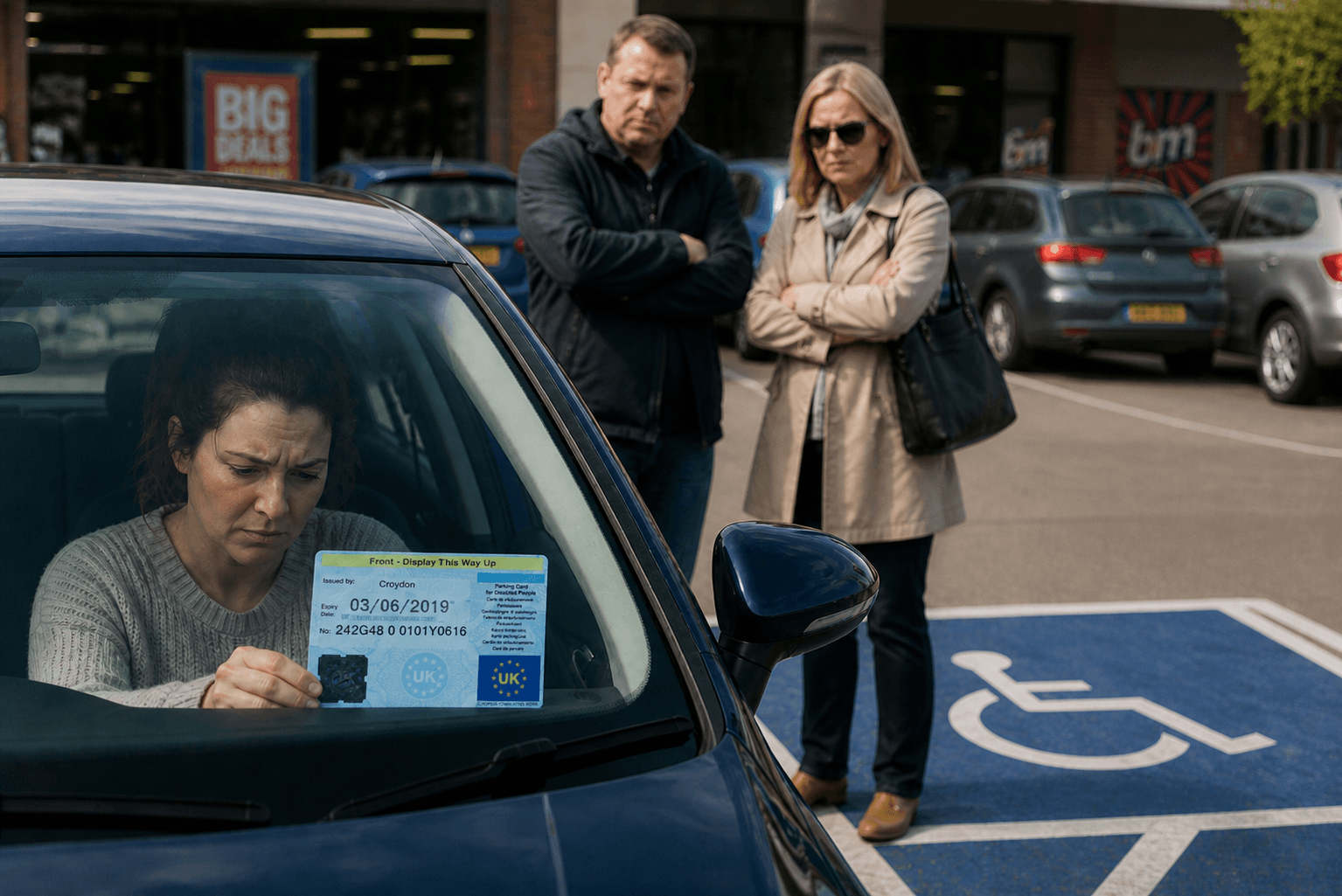
Disabled people should not have to prove they are disabled to strangers in a car park. Yet more Blue Badge holders, especially people with invisible disabilities, are being stared at, challenged, filmed or accused of “faking it” when they use disabled parking spaces. A Blue Badge exists to help disabled people park closer to where they need to go, whether they drive or travel as a passenger, and the badge belongs to the person, not the vehicle.
This matters because public suspicion does not stop Blue Badge misuse. It often harms the very people the scheme exists to support. It can make disabled people feel unsafe, embarrassed or reluctant to go out at all.
At Purpl, we see this as part of a much bigger issue; disabled people are too often forced to justify their needs before they can access everyday support. By educating and informing people of the realities of living with a disability we hope that we can help change the narrative.
A recent Guardian report highlighted disabled people and carers saying they have been harassed, questioned, filmed, threatened or accused of faking disability when using Blue Badge spaces. The report also stated that around 3 million people in the UK now have a Blue Badge, and that many people who contacted the newspaper described a rising culture of suspicion around disability support.
This is where the conversation becomes dangerous. Yes, Blue Badge misuse exists. Yes, councils have powers to act when badges are misused. But suspicion from strangers can quickly become harassment.
Many disabled people already deal with pain, fatigue, anxiety, mobility challenges, sensory overload, breathlessness, fluctuating symptoms or the stress of caring responsibilities. Being challenged in public can turn a simple food shop, appointment or school run into something frightening.
Purpl Insight: A Blue Badge space is not a reward or a luxury. It is an access tool that helps disabled people manage journeys that may already be physically, mentally or emotionally difficult.
A Blue Badge helps disabled people park closer to where they need to go. GOV.UK explains that the badge can be used by the holder as a driver or as a passenger, and that it is intended mainly for on-street parking. Off-street car parks, such as supermarkets, hospitals and shopping centres, can have their own rules.
A Blue Badge is linked to the person, not the car. This means someone may use their badge in a family member’s car, taxi or hire car if they are driving or travelling as a passenger.
That is one reason public assumptions are so often wrong. A person may step out of the passenger seat. A parent may park in a Blue Badge bay because the badge belongs to their disabled child. A carer may display the badge because they are collecting or dropping off the disabled person nearby.
The badge should only be used for the benefit of the badge holder. It should not be lent to friends or family so they can park more easily without the disabled person present. Misuse can lead to a fine of up to £1,000 and confiscation of the badge.
Purpl Tip: If you use a Blue Badge, make sure anyone who drives you understands the rules too. If they use it incorrectly, it can put your badge at risk.
One of the biggest problems with Blue Badge judgement is the idea that disability must “look” a certain way.
Some people expect every Blue Badge holder to use a wheelchair, walking frame or visible mobility aid. That is not reality. Hidden disabilities, including some mental health conditions, neurological conditions, pain conditions and cognitive conditions, can seriously affect a person’s ability to travel safely or walk as part of a journey.
In England, Blue Badge eligibility expanded from 30 August 2019 to include people with non-visible disabilities, including those who cannot walk as part of a journey without considerable psychological distress or risk of serious harm.
Scope has also highlighted that people with invisible impairments are often not believed, accused of faking disability, or given rude looks and comments when using Blue Badge bays or accessible toilets.
This creates a painful double bind. People with invisible disabilities may need accessible parking to leave the house safely. However, they may also fear being judged because their disability is not obvious to strangers.
Purpl Insight: “You don’t look disabled” is not a harmless comment. It can make someone feel unsafe, ashamed and less likely to access the support they are legally entitled to use.
Blue Badge misuse can stop genuine badge holders from getting the parking access they need. That matters. Disabled parking spaces are limited, and when someone misuses a badge, it can have a real impact.
However, members of the public are not the right people to police disability. They do not know someone’s diagnosis, symptoms, pain levels, mental health, walking ability, neurological condition, learning disability, fatigue, sensory needs or caring situation.
The Blue Badge schemes are administered and enforced by local councils. If someone has questions about a badge or believes a badge is being misused, the proper route is to contact the relevant council.
Confronting someone in a car park can escalate quickly. Filming someone, following them, blocking them in, shouting at them or demanding private medical information is not acceptable. It can also be particularly distressing for people with anxiety, autism, PTSD, learning disabilities, chronic pain, fatigue or mobility difficulties.
Purpl Tip: If you genuinely suspect Blue Badge misuse, report it to the local council. Do not confront the person, film them or share their image online.
You do not have to explain your disability to a stranger.
If someone questions you, your safety comes first. You may choose to say something brief such as, “This badge is being used correctly,” or “Please speak to the council if you have concerns.” You do not need to share your diagnosis, medical history or personal circumstances.
If the person becomes aggressive, try to move away if you can. If you are in a supermarket, hospital, retail park or shopping centre, you can ask security or staff for help. Should you feel threatened or unsafe, call the police.
It may also help to record details after the incident, including the date, time, location, what happened, whether there were witnesses and whether CCTV may be available. If the incident happened in a private car park or store, you can complain to the business and ask what they are doing to protect disabled customers from harassment.
Purpl Tip: You are allowed to use support without performing your disability for strangers. A valid Blue Badge is enough.
The most helpful thing non-disabled people can do is simple: stop assuming.
If you see someone using a Blue Badge space, do not stare, comment, film or interrogate them. If you are worried about genuine misuse, report it properly.
You can also help by challenging everyday disability myths. When someone says “they don’t look disabled,” remind them that many disabilities and long-term conditions are hidden. When someone complains about Blue Badge spaces, remind them that access is not special treatment. It is what allows many disabled people to take part in everyday life.
Purpl Insight: Disability access works best when people protect it without turning disabled people into suspects.
Yes. In England, people with hidden disabilities have been able to apply for a Blue Badge since 30 August 2019. This can include people who cannot walk as part of a journey without considerable psychological distress or risk of serious harm.
Yes. A Blue Badge can be used when the badge holder is driving or travelling as a passenger. Citizens Advice explains that the badge is linked to the person, not one specific vehicle.
A carer or driver can use the badge when they are transporting, collecting or dropping off the disabled person and need to park close to where that person needs to go. They should not use the badge for their own errands when the disabled person is not present or being collected.
Yes. GOV.UK says it is a criminal offence to misuse a Blue Badge, and doing so could lead to a £1,000 fine and confiscation of the badge.
Members of the public should not demand someone’s private information or confront them in a car park. If someone suspects misuse, the proper route is to report it to the relevant local council. Councils administer and enforce the Blue Badge scheme.
Yes. You can still receive a parking fine if you do not follow the rules, display the badge incorrectly, park somewhere unsafe or use the badge where local rules do not allow it. Citizens Advice advises checking local rules, signs and car park conditions.
Some people wrongly believe disability must be visible. Scope says disabled people with invisible impairments often face negative attitudes, disbelief and accusations of faking disability, including when using Blue Badge bays.
Stay safe first. You do not have to explain your disability. If the incident happens in a shop, hospital, supermarket or private car park, ask staff or security for help. If you feel threatened, contact the police. You can also make a complaint to the business or car park operator.
Some people may automatically qualify depending on their benefit award and points, but not everyone who receives PIP automatically gets a Blue Badge. Eligibility rules vary across the UK, so you should check the official Blue Badge application guidance for your nation or local council.
Disabled people should not be treated like suspects for using a Blue Badge. The scheme exists because many people need to park closer to their destination to travel safely, manage symptoms, reduce pain, avoid distress or support a disabled child, partner or family member.
Blue Badge misuse should be taken seriously, but public shaming is not the solution. Strangers do not know someone’s disability, diagnosis or access needs by looking at them. When people confront, film or accuse disabled people in car parks, they create fear and exclusion.
A fairer approach is simple: respect Blue Badge holders, report genuine misuse through the right channels, and remember that disability does not always look the way people expect.
Georgina is the founder of Purpl, a UK disability discount platform created to help disabled people and people with long-term health conditions save money on everyday costs. Purpl exists because life with a disability often costs more, and too many people are left to navigate benefits, access needs, extra costs and public judgement without enough support.
Through Purpl, Georgina shares practical guides, lived experience, money-saving help and disability-focused information to support disabled people, carers and families across the UK.
Motability in the UK: A Comprehensive Guide
How to Apply for a Disabled Blue Badge – Everything to Know
How to Replace a Lost, Damaged, or Stolen Blue Badge
How to Apply for a Disabled Parking Space
Airport Parking for Blue Badge Holders