
Download the app


© 2026. The Purpl Co Limited. All rights reserved.


Download the app
© 2026. The Purpl Co Limited. All rights reserved.
5 min read
Written by
Georgina, Founder of Purpl
Published on
August 20, 2026
Last reviewed: 20 August 2026
Applies to: UK
Written by: Georgina, Founder of Purpl
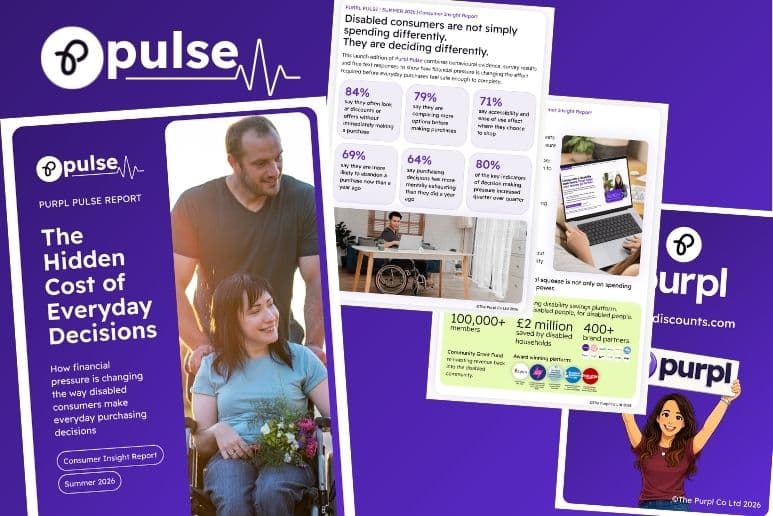
Purpl Pulse is our new quarterly insight programme exploring how disabled consumers shop, save, and make spending decisions. Our first report, based on behavioural shopping data and research with more than 1,300 disabled people, reveals that accessibility, affordability, and confidence are becoming increasingly linked in everyday purchasing decisions.
Disabled consumers aren’t just spending differently. They’re making decisions differently.
When people talk about the cost of living, the conversation usually focuses on rising prices. If you’re disabled or living with a long-term health condition, you already know the story is more complicated than that.
For instance, the cheapest supermarket isn’t always accessible. In many cases, the lowest delivery option doesn’t work. Sometimes, the product on offer simply isn’t suitable.
Those everyday decisions come with an extra cost that isn’t always measured in pounds and pence. They’re measured in time, effort, uncertainty, and compromise.
That’s exactly why we’ve created Purpl Pulse.
Key Takeaways for Retailers & Policy Makers
- Accessibility is Affordability: 71% of disabled consumers choose where to shop based on accessibility. A lower price point is ineffective if the store, website, or delivery method is physically or digitally inaccessible.
- High Mental Fatigue: 64% of respondents find daily spending decisions mentally exhausting, leading 69% to abandon purchases more frequently than last year.
- Need for Certainty: 84% regularly browse discounts and 79% compare multiple options before buying, demonstrating that trust and clarity are required before committing to a purchase.
| Survey Metric / Question Focus | Key Finding | Impact on Consumer Behaviour |
| Financial Uncertainty | 61% | Feel more financially uncertain than a year ago |
| Mental Fatigue | 64% | Find everyday spending decisions mentally exhausting |
| Accessibility Factor | 71% | State accessibility directly influences where they shop |
| Price Comparison | 79% | Compare more options before committing to a purchase |
| Discount Browsing | 84% | Regularly look for discounts before buying |
| Cart Abandonment | 69% | Are more likely to abandon a purchase than last year |
Download the full report at purpldiscounts.com/pulse.
Purpl Pulse is our new quarterly insight programme, designed to better understand how disabled consumers shop, save, and make purchasing decisions.
Each report combines behavioural shopping data observed through the Purpl platform with large-scale member research to build a clearer picture of how financial pressure, accessibility, and confidence are changing everyday spending decisions.
Our aim is simple: to help brands, policy makers, and organisations better understand the real experiences of disabled consumers, so they can make better decisions and create products and services that genuinely work for our community.
More than 1,300 disabled people took part in our first survey, sharing over 1,000 written comments about how they shop and the challenges they face. While every person’s experience is different, several clear themes emerged.
However, although inflation has started to fall, many disabled consumers don’t feel any more financially secure.
In fact:
The findings suggest that financial pressure isn’t just affecting what people buy. It’s affecting how they make decisions in the first place.
One of the strongest messages throughout the research was that price is only one part of the decision. 71% of respondents said accessibility and ease of use influence where they choose to shop.
For many disabled consumers, the cheapest option simply isn’t a realistic option if it creates unnecessary barriers, requires more physical effort, or doesn’t meet their needs.
As one member told us:
“Not only do I have to consider accessibility when shopping, I now have to factor in the excessive price increases with basic groceries.”
Another explained:
“Having to shop around is harder as a wheelchair user. I have to weigh up the cheapest price and add on fuel prices to see where it is best to shop.”
Those experiences reinforce an important point: As a result, accessibility isn’t separate from affordability. For many disabled people, they’re closely linked.
We also found that disabled consumers are becoming much more deliberate about everyday purchases:
Taken together, these findings suggest that many people now need a higher level of confidence before committing to a purchase. Price still matters, but so do trust, accessibility, practicality, and confidence that a purchase will genuinely meet their needs.
Reports such as Scope’s Disability Price Tag have done an excellent job of highlighting the additional financial costs associated with disability.
Purpl Pulse aims to build on that understanding by exploring something slightly different. Specifically, we are interested in how those additional costs influence everyday consumer behaviour:
By answering those questions every quarter, we hope to build one of the UK’s most valuable sources of insight into disabled consumer behaviour.
What is the Purpl Pulse report?
Purpl Pulse is a quarterly UK consumer report published by Purpl. It analyses behavioural shopping data and survey responses from over 1,300 disabled consumers to track spending trends, accessibility challenges, and financial confidence.
How does accessibility impact spending choices for disabled consumers?
According to Purpl Pulse research, 71% of disabled shoppers choose where to buy based on store or website accessibility. Inaccessibility acts as a financial and physical barrier, proving that accessibility and affordability are directly linked.
How can brands access the full Purpl Pulse findings?
You can download the full, free report along with detailed data breakdowns and practical recommendations for retailers directly at purpldiscounts.com/pulse.
Most importantly, we’d like to thank everyone who completed our survey. Every response, every comment, and every story has helped create a report that we hope will improve understanding of the everyday realities disabled people face.
Your experiences are helping brands, policy makers, and organisations make better-informed decisions. That’s exactly why Purpl Pulse exists.
The first edition of Purpl Pulse is available now and explores these findings in much greater detail, alongside practical recommendations for brands and organisations.
Download the full Purpl Pulse report today and discover how disabled consumer behaviour is changing.
Georgina is the Founder of Purpl, a disabled-led UK discount platform created to help offset the extra cost of disability. Living with Multiple Sclerosis, she creates practical guidance on benefits, household bills, travel rights, and health self-advocacy.
Maximising benefits and savings
Accessible travel and mobility support