
Download the app


© 2026. The Purpl Co Limited. All rights reserved.


Download the app
© 2026. The Purpl Co Limited. All rights reserved.
12 min read
Written by
Georgina, Founder of Purpl
Published on
September 16, 2026
Last reviewed: 16 September 2026
Applies to: UK. PIP applies in England, Wales and Northern Ireland. In Scotland, Adult Disability Payment (ADP) uses the same four reliability principles.
Written by: Georgina, Founder of Purpl
Direct answer: For PIP, being able to do something once does not necessarily mean you can do it reliably. DWP must consider whether you can complete the relevant activity safely, to an acceptable standard, repeatedly and within a reasonable time. If you cannot meet even one of these four rules, you should not be treated as able to complete that particular PIP descriptor reliably.
These rules come from Regulation 4(2A) of the Personal Independence Payment Regulations and apply across all PIP daily living and mobility activities. Current DWP guidance makes clear that if you cannot complete a descriptor reliably, a different descriptor should be considered.
In Scotland, most working-age disability claims are now made through Adult Disability Payment rather than PIP. Social Security Scotland also uses the same four reliability tests when deciding which ADP descriptor applies.
If your condition changes from day to day, you may also find our Purpl Disability Benefits Guide useful alongside this article.
| Rule | What it means | In everyday life | Example |
|---|---|---|---|
| Safely | You must be unlikely to harm yourself or someone else during or after the activity. | The task carries a real risk of falls, burns, cuts, choking or another type of harm. | You drop hot cookware because of hand tremors or are at risk of falling in the shower. |
| Acceptable standard | You need to complete the activity well enough for it to count as properly done. | You may manage part of the task, but not well enough to complete it properly. | You cannot reach parts of your body to wash them properly or cannot dress yourself correctly. |
| Repeatedly | You must be able to do the activity as often as you reasonably need to. | Doing it once leaves you too exhausted, breathless or in too much pain to do it again when needed. | You make breakfast but cannot prepare lunch because of the fatigue it causes. |
| Reasonable time | You should take no more than twice as long as someone without a condition affecting that activity. | Rest breaks, pain or reduced movement make the activity take much longer. | Dressing takes 40 minutes because of stiffness, weakness or breathlessness. |
The legal foundation for the PIP reliability test is Regulation 4(2A) of the Social Security (Personal Independence Payment) Regulations 2013.
When DWP considers a daily living or mobility activity, it should not simply ask:
“Can you physically do this?”
It also needs to consider:
“Can you do it reliably?”
The four tests are whether you can carry out the activity:
This applies to every PIP activity. Current DWP assessment guidance says that where somebody cannot reliably complete a descriptor, they should be treated as unable to complete it at that level, and a different descriptor should be considered.
This means pain, fatigue, breathlessness, dizziness, weakness, cognitive problems, sensory difficulties or psychological distress may all matter if they affect the way you carry out an activity.
Purpl Tip: Try not to think only about whether you can physically finish a task. Think about what it takes out of you, whether you need help, whether it is safe and whether you could do it again later.
For PIP, “safely” means being able to complete an activity in a way that is unlikely to cause harm to you or someone else.
Importantly, the rules cover harm that may happen during the activity or afterwards.
You do not necessarily need to have an accident every time you attempt the task.
What matters is whether there is a genuine risk of harm.
Common examples of safety issues across PIP activities include:
You may also need another person to supervise you because doing the activity alone would not be safe.
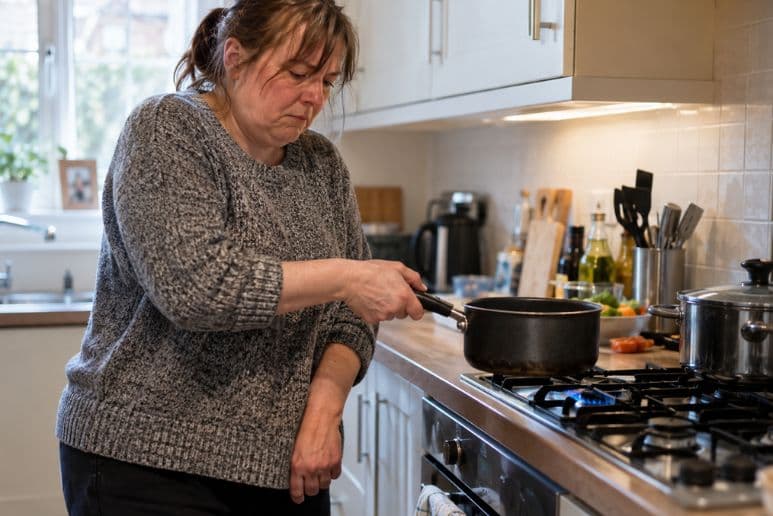
You may technically be able to lift a saucepan.
But if your grip regularly gives way without warning and there is a real chance of you dropping boiling water, that does not automatically mean you can prepare food safely.
Likewise, you might be able to step into a shower, but if you regularly lose your balance and need someone nearby in case you fall, that safety risk matters.
Purpl Tip: When describing a safety problem, explain the actual risk. Say what could happen, how often it happens, whether it has happened before and whether somebody needs to supervise or help you.
The PIP regulations assess whether you achieve the actual outcome of an activity properly. Attempting a task or partially completing it does not mean you meet the required standard.
You may be able to pull on a T-shirt, but severe hand weakness means you cannot manage buttons, zips or other fastenings and frequently need somebody to finish dressing you.
The fact that you can start dressing does not automatically mean you can complete the whole activity to an acceptable standard.
Purpl Insight: PIP is about what you can actually achieve in everyday life, not whether you can make an attempt at something.
“Repeatedly” requires you to carry out an activity as often as it would reasonably be required throughout the day or across consecutive days.
You walk 50 metres to a nearby shop.
By the time you arrive:
That recovery time may be relevant when deciding how far you can move around repeatedly.
Purpl Tip: Ask yourself, “Could I do this again when I reasonably needed to?” If the answer is no, explain why and how long you need to recover.
Under PIP regulations, a “reasonable time” means taking no more than twice as long as the maximum time a person without a disability or health condition would ordinarily take.
Documenting Time on Forms: Avoid vague phrasing like “It takes me a long time.” Instead, give specific functional details: “Due to joint stiffness and fatigue, taking off my clothes and dressing takes 45 minutes every morning, requiring three rest breaks.”.
The 2x Rule: If a non-disabled person takes 10 minutes to prepare a light meal, taking more than 20 minutes due to rest breaks or joint pain means you fail the reasonable time test.
Avoid writing:
“It takes me ages to get dressed.”
Instead, explain something like:
“It usually takes me 40 to 45 minutes to get dressed because I have to sit down and rest several times due to weakness and breathlessness.”
That gives the decision-maker much more useful information.
Purpl Tip: If time is part of your difficulty, try timing everyday tasks for a few days. People often underestimate how long activities take when they have adapted to doing everything slowly.
The reliability rules operate alongside the DWP rules for fluctuating conditions:
“On around five days out of seven, severe back pain means I cannot stand at the cooker safely. If I try to prepare breakfast, the pain and exhaustion normally mean I cannot prepare another meal at lunchtime.”
This explains both:
Purpl Tip: Try to describe a typical week rather than only talking about your worst day. Saying “five days out of seven” is usually clearer than saying “quite often”.
Try to avoid simple yes or no answers.
A much stronger way to explain your difficulties is to use this six-step structure:
What happens → Why it happens → Help needed → Frequency → How long it takes → What happens afterwards
“Because of weakness and tremors in my hands, I struggle to grip knives and pans safely. I have dropped hot liquids twice in the last six months. My partner prepares our evening meals and stays nearby if I cook. This affects me around five days each week. Making a simple breakfast can take me about 45 minutes because I need several rest breaks, and afterwards my arms are usually too exhausted to prepare lunch.”
That tells DWP far more than:
“I struggle with cooking.”
It covers:
Purpl Tip: Use examples from your real life. Specific examples are usually much more useful than broad phrases such as “I struggle”, “sometimes” or “it depends”.
Ask yourself these four questions for every activity covered by the PIP claim form:
Purpl Insight: The four rules work together. You do not have to fail all four. One reliability problem can be enough to mean a particular descriptor does not accurately reflect what you can do.
| PIP activity | Reliability problem | Practical example |
|---|---|---|
| Preparing food | Safely / repeatedly | Tremors cause you to drop hot cookware, and preparing breakfast leaves you too exhausted to make lunch. |
| Washing and bathing | Safely / acceptable standard | Poor balance puts you at risk of falling, while restricted movement means you cannot wash parts of your lower body without help. |
| Dressing and undressing | Reasonable time | Pain, stiffness or breathlessness means getting dressed takes much longer than it would normally take someone without your limitations. |
| Taking nutrition | Safely | Swallowing difficulties create a real choking risk unless someone supervises you. |
| Managing treatment | Acceptable standard | Cognitive difficulties mean you make medication mistakes unless somebody prompts or helps you. |
| Engaging with people | Safely / acceptable standard | Severe mental distress means you need social support to engage with other people. |
| Moving around | Repeatedly | Walking a certain distance once causes severe pain and weakness, preventing you from doing it again when needed. |
These are examples only. The right PIP descriptor depends on your own needs, how often they occur and the evidence available.
Purpl Tip: Do not try to copy an example word for word. Use it as a prompt to describe what genuinely happens to you.
PIP looks at how your condition affects your daily life, not simply the name of your diagnosis.
A medical letter confirming that you have multiple sclerosis, arthritis, COPD, autism or another condition can be helpful, but evidence that explains the functional impact is usually much more useful.
Helpful evidence might include:
Purpl Tip: A diary is most useful when it shows ordinary life, including days when you manage something and days when you cannot. You do not need every entry to be a bad day.
The reliability rules matter at every stage of the PIP process.
Try not to answer questions only from the point of view of your best day.
If you are asked:
“Can you cook?”
you might need to explain:
“Sometimes, but not reliably. On most days I need to sit down and my partner handles hot pans because my grip is unsafe. If I prepare breakfast myself, the fatigue often means I cannot make lunch.”
That gives a much more accurate answer than simply saying “yes”.
If your decision says something like:
“You told us you can prepare meals.”
you can explain why that does not accurately reflect what happens.
For example:
“Although I sometimes attempt to prepare food, I cannot do it safely or repeatedly. My grip causes me to drop pans and I need my partner nearby. Preparing one meal also leaves me unable to prepare another later in the day.”
Focus on which descriptor you believe better reflects your needs and why.
A tribunal should also consider the PIP Regulations, including the reliability rules.
Rather than simply arguing that the original decision was unfair, explain:
Purpl Tip: Keep bringing your argument back to the activity and descriptor. PIP is not awarded because a condition is serious. It is awarded according to how your needs match the PIP activities and descriptors.
The four criteria are safely, to an acceptable standard, repeatedly, and within a reasonable time period.You need to be able to meet all four for a particular descriptor to apply reliably.
Yes. If you cannot meet even one of the four rules, DWP should not treat you as able to complete that particular descriptor reliably. A different descriptor should then be considered.iptor level.descriptor reliably. A different descriptor should then be considered.
You need to be able to complete the activity in no more than twice the time that someone without a physical or mental health condition affecting that activity would normally take.
Pain can be relevant if it affects your ability to complete one or more PIP activities. For example, pain might make an activity unsafe, slow you down, prevent you completing it properly or mean you cannot repeat it later.
Yes, where fatigue affects a PIP activity. Fatigue can be especially important when deciding whether you can repeat a task as often as reasonably required.
It can. Breathlessness may affect how long an activity takes, whether you can repeat it, whether you need help or whether the activity can be completed safely.
No, not necessarily. PIP should consider whether you can do the activity safely, properly, repeatedly and within a reasonable time, not simply whether you can manage it once.
It can. If doing an activity leaves you needing a long recovery period and prevents you repeating it when you reasonably need to, that can be relevant to the repeatability test.
DWP looks at how your needs vary over the relevant 12-month period. If one descriptor applies on more than 50% of days, that descriptor will normally be selected. If different scoring descriptors apply on different days, DWP uses additional rules to decide which descriptor best reflects your needs. The four reliability rules still apply when deciding what you can actually do on those days.
Adult Disability Payment uses the same four broad reliability tests: safely, to an acceptable standard, repeatedly and within a reasonable time. Social Security Scotland says these tests should be applied when choosing the correct ADP descriptor.
Yes. If you believe DWP chose the wrong descriptor because it did not properly consider safety, repetition, acceptable standard or time, explain that as part of your Mandatory Reconsideration or appeal.
The four PIP reliability rules are one of the most important parts of understanding how PIP activities should be assessed.
Being able to do something once does not automatically mean you can do it reliably.
DWP should consider whether you can do it:
If pain, fatigue, weakness, breathlessness, cognitive difficulties, mental distress or another effect of your condition stops you meeting one of those tests, explain it clearly on your form or during your assessment.
The strongest examples normally explain what happens, why it happens, what help you need, how often it happens, how long it takes and what happens afterwards.
If your condition fluctuates, keeping a diary can also help you show the pattern rather than trying to remember everything when your assessment arrives.
Georgina is the Founder of Purpl and lives with multiple sclerosis.
She created Purpl to help people with disabilities and long term health conditions reduce the extra cost of disability through discounts, practical information and community support.
Purpl’s benefits guides combine official information with practical explanations designed to make complicated rules easier to understand.
This article provides general information and should not replace individual welfare rights or legal advice.
Proving fluctuating conditions for PIP: how the 50% rule works: How DWP looks at good days, bad days and symptoms that change over time.
Purpl’s UK Disability Benefits & Support Handbook: A practical guide to disability benefits, grants and financial support across the UK.
Purpl Benefits Checker: Check which disability benefits and financial support you may be entitled to.
Mobility and independent living discounts: Save on mobility equipment, aids and products that support independence.
Technology disability discounts: Explore member savings on technology that may help with work, communication and everyday tasks.
Home and household disability discounts: Save on home products, appliances and everyday household costs.
Purpl Community Grant Fund: Find out about grants that may help with disability-related equipment, adaptations and support.