
Download the app


© 2026. The Purpl Co Limited. All rights reserved.


Download the app
© 2026. The Purpl Co Limited. All rights reserved.
14 min read
Written by
Georgina, Founder of Purpl
Published on
June 26, 2026
Last reviewed: 25 June 2026
Applies to: England and Wales, with notes for Scotland and Northern Ireland
Written by: Georgina, Founder of Purpl
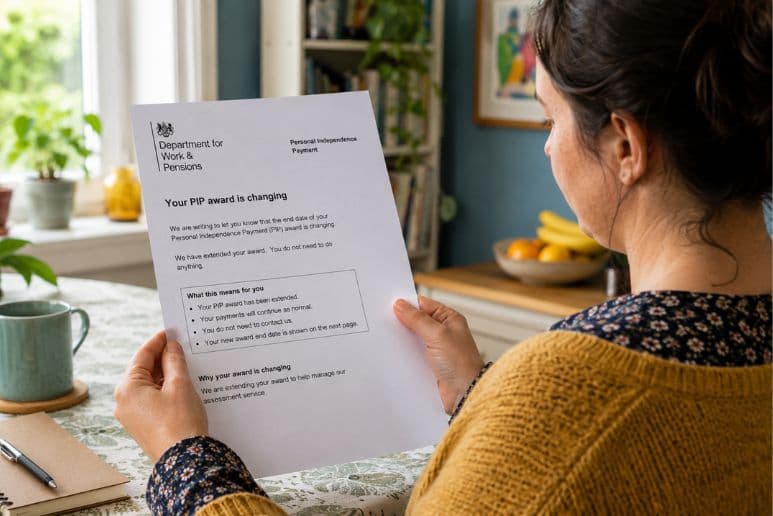
If your PIP award review date has suddenly moved, or the DWP has sent you a letter saying it has extended your Personal Independence Payment award, try not to panic. New DWP rules came into force on 2 June 2026, giving the Department for Work and Pensions the power to extend some fixed term PIP awards without carrying out a full award review straight away.
This does not mean the DWP has decided your condition has changed. It does not mean your PIP is being cut. It usually means the DWP has moved your review or award end date because of changes brought in under The Universal Credit, Personal Independence Payment, Jobseeker’s Allowance and Employment and Support Allowance (Decisions and Appeals) (Amendment) Regulations 2026.
The official Explanatory Memorandum says the change allows the Secretary of State for Work and Pensions to extend the length of a fixed term PIP award where this is necessary to safeguard the efficient administration of PIP. It also explains that the DWP introduced this because growing demand and limited assessment capacity have created backlogs, which can leave awards at risk of ending before the DWP makes a further decision.
Need help making your money go further? Purpl helps disabled people, people with long term health conditions, carers and families access discounts that can reduce everyday costs. If PIP, disability benefits or extra health related expenses affect your household budget, you can explore the latest Purpl discounts and savings at https://www.purpldiscounts.com/.
What has changed with PIP award review dates in 2026?
Why has the DWP extended some PIP awards?
Does a PIP extension letter mean your money is safe?
Who could benefit from the new PIP extension rules?
Who may not benefit from the new PIP extension rules?
What should you do if you get a PIP extension letter?
What if your condition has got worse?
Can you appeal if the DWP extends your PIP award instead of reviewing it?
Does this change PIP eligibility rules?
What does this mean for people with lifelong conditions?
Frequently asked questions (FAQs) about PIP award date changes
In summary
From 2 June 2026, the DWP gained a new legal power to extend the length of some fixed term Personal Independence Payment awards. The change sits inside The Universal Credit, Personal Independence Payment, Jobseeker’s Allowance and Employment and Support Allowance (Decisions and Appeals) (Amendment) Regulations 2026 (https://www.legislation.gov.uk/uksi/2026/457/made).
In plain English, this means the DWP can extend a fixed term PIP award where it considers this necessary to keep PIP running properly.
This matters because many PIP claimants have fixed term awards. These awards normally have an end date, and the DWP usually starts a review before that end date so it can decide whether entitlement should continue. The Explanatory Memorandum says the DWP generally sets PIP award reviews around 12 months before the award end date, so it can check whether entitlement should continue before the award ends (https://www.legislation.gov.uk/uksi/2026/457/pdfs/uksiem_20260457_en_001.pdf).
The new rule gives the DWP another option. Instead of pushing every claimant through an award review when the system does not have enough capacity, it can extend some awards and keep payments going for longer.
That is why some people may receive letters saying their PIP award date or review date has changed.
Purpl Tip: If you receive a PIP extension letter, keep it with your original award letter. It may affect your future review date, award end date and any linked support that depends on your PIP award.
The DWP introduced this change because the PIP review system has been under pressure. The official Explanatory Memorandum says administrative capacity has sometimes limited how quickly the DWP can review PIP awards, including when demand for PIP exceeds the number of assessments the system can carry out (https://www.legislation.gov.uk/uksi/2026/457/pdfs/uksiem_20260457_en_001.pdf).
That backlog matters for claimants. If the DWP cannot review an award in time, a fixed term award could reach its end date before the DWP makes a new decision. The new power aims to reduce that risk by allowing the DWP to extend awards where necessary.
Benefits and Work reported that the DWP said the assessment system could “fall over” if it did not have the power to extend existing awards because of growing demand. Their report also highlighted that the regulations allow the DWP to lengthen existing fixed term awards, but they do not allow the DWP to shorten them or change the rate someone receives (https://www.benefitsandwork.co.uk/news/dwp-to-begin-lengthening-existing-pip-awards-from-june).
This is why the change feels confusing. From a claimant’s point of view, a new letter from the DWP can cause instant anxiety. From the DWP’s point of view, the letter may simply mean the department has extended the award to avoid forcing a review through an overloaded system.
Purpl Insight: A PIP extension letter may feel alarming because it comes from the DWP, but in many cases it should mean fewer immediate review pressures, not more.
If the DWP extends your fixed term PIP award under this specific new power, it cannot use that power to cut your award, reduce your PIP rate, shorten your award or change your entitlement conditions.
The Explanatory Memorandum is very clear on this point. It says decision makers cannot use the new rule to remove entitlement, reduce the length of an award, or increase or decrease the rate of PIP a claimant receives (https://www.legislation.gov.uk/uksi/2026/457/pdfs/uksiem_20260457_en_001.pdf).
So if your letter simply says your award has been extended, your current rate should continue unless something else changes.
However, it is still important to read the letter carefully. Check:
If something looks wrong, contact the PIP enquiry line or seek benefits advice.
Purpl Tip: Do not throw the letter away. Even if the extension is good news, keep it as evidence of your current award period and payment position.
The new legal power applies to fixed term PIP awards in England and Wales. The official regulation gives the Secretary of State the power to extend the length of a fixed term PIP award where necessary to safeguard the efficient administration of PIP (https://www.legislation.gov.uk/uksi/2026/457/made).
In practice, this is most likely to help people whose fixed term PIP awards are due for review, but whose review would add pressure to an already stretched assessment system.
The Social Security Advisory Committee minutes say the DWP intends to standardise new PIP awards so that a claimant would usually receive a first review after three years and subsequent reviews after five years, while still allowing decision makers to use discretion in individual cases (https://www.gov.uk/government/publications/social-security-advisory-committee-minutes-of-meetings-in-2026/minutes-of-the-meeting-held-on-4-march).
Benefits and Work also reported that the DWP intends these changes to cover most PIP claimants aged 25 and over, with review periods moving to a minimum of three years for a new claim and five years at the next review if they remain entitled (https://www.benefitsandwork.co.uk/news/dwp-to-begin-lengthening-existing-pip-awards-from-june).
That does not mean every claimant will automatically get the same extension. Decision makers can still make shorter or longer awards depending on the person’s circumstances.
Purpl Insight: This change is not a personal judgement about your health. It is mainly about giving the DWP more room to manage award reviews without leaving people at risk of payment gaps.
Not every PIP claimant will see their award extended in the same way.
Benefits and Work reported that the DWP does not intend to apply the longer review approach to claimants aged under 25, because the department argues that younger claimants may have a greater likelihood of improvement in health and functional ability over time, and that more frequent engagement may help identify employment support earlier (https://www.benefitsandwork.co.uk/news/dwp-to-begin-lengthening-existing-pip-awards-from-june).
The official Explanatory Memorandum also confirms that the regulations apply in England and Wales. Scotland now uses Adult Disability Payment instead of PIP, and Northern Ireland manages social security under separate devolved rules (https://www.legislation.gov.uk/uksi/2026/457/pdfs/uksiem_20260457_en_001.pdf).
This means:
Purpl Tip: Do not assume the rules apply to you just because you have seen a social media post. Check your own letter, your nation’s rules and your award details.
If you receive a letter saying your PIP award has been extended and your circumstances have not changed, you usually do not need to do anything. Your payments should continue at your current rate.
However, you should still read the letter carefully because it contains important information about your award.
A simple checklist can help:
You do not need to ask for a review just because the DWP has extended your award. In many cases, asking for an early review could create unnecessary risk unless your needs have changed and you believe your current award no longer reflects your disability related support needs.
Purpl Insight: A PIP extension letter can feel like a threat at first glance, but if your rate and components stay the same, it may simply mean your next review has moved further away.
If your condition has significantly worsened, or the help you need has increased, you should not assume you have to wait until the new extended review date.
GOV.UK says you must report changes to your needs or circumstances, including if the level of help you need or your condition changes, because this could affect your PIP (https://www.gov.uk/pip/change-of-circumstances).
This is the part of the new rules that worries some advice organisations. If the DWP extends more awards, some people whose conditions have worsened may stay on a lower award for longer unless they report a change themselves.
That does not mean you should rush into reporting a change without advice. Reporting a change of circumstances can lead to a review of your whole award, not just the part you think should increase. Your award could increase, stay the same, reduce or stop, depending on the decision.
There is one reassuring point, though. The DWP confirmed through the Social Security Advisory Committee process that extension decisions carry appeal rights (https://www.gov.uk/government/publications/social-security-advisory-committee-minutes-of-meetings-in-2026/minutes-of-the-meeting-held-on-4-march).
Official DWP decision maker guidance also explains how a tribunal should consider an appeal. The tribunal should look at whether the DWP needed to extend the award for administrative reasons (https://assets.publishing.service.gov.uk/media/6a216ff42cdcfdb7436abf40/09-26-adm-memo.pdf).
This means an extension letter does not completely trap claimants. If your health, care needs or mobility needs have severely deteriorated, and you genuinely need a full review, you still have appeal rights.
Before reporting a worsening condition, it may help to:
If your needs have worsened and your current award no longer reflects the support you need, getting advice early can help you make a stronger, clearer case.
Purpl Tip: If your condition has worsened, do not rely only on diagnosis names. Explain what has changed in real life, for example washing, dressing, cooking, communicating, planning journeys, walking distance, falls, fatigue, pain, risk or recovery time.
Yes, the DWP has confirmed that extension decisions carry appeal rights. This matters if your award has been extended for administrative reasons, but your health, care needs or mobility needs have severely worsened and you believe you need a full review sooner.
The Social Security Advisory Committee minutes record DWP confirmation that extension decisions carry full appeal rights (https://www.gov.uk/government/publications/social-security-advisory-committee-minutes-of-meetings-in-2026/minutes-of-the-meeting-held-on-4-march). The DWP’s advice for decision makers also explains that if a claimant appeals, the tribunal should look at whether it was necessary to extend the award to safeguard the efficient administration of PIP (https://assets.publishing.service.gov.uk/media/6a216ff42cdcfdb7436abf40/09-26-adm-memo.pdf).
This does not mean every claimant should appeal an extension. For many people, an extension may feel like a relief because it keeps payments going and delays a stressful award review. But if the extension leaves you stuck on an award that no longer reflects your needs, you should get welfare rights advice and ask what route makes the most sense for your situation.
You may have more than one possible route, depending on your circumstances. You may need to report a change of circumstances, challenge the extension decision, or ask for advice about both. The safest option will depend on your award, your health, your evidence and the date on your letter.
Purpl Insight: An extension letter does not have to mean silence. If your needs have seriously changed, you still have options, but it is worth getting advice before deciding what to do next.
No. These new regulations do not change the basic PIP entitlement test. They change the DWP’s power to extend fixed term awards in certain administrative circumstances.
The Explanatory Memorandum says the amendment is restricted to allowing the Secretary of State to extend awards of benefit and does not change the conditions of entitlement. It also says the new rule cannot increase or decrease the PIP rate someone receives (https://www.legislation.gov.uk/uksi/2026/457/pdfs/uksiem_20260457_en_001.pdf).
This is important because a lot of PIP news is being discussed at once. The award extension rules are separate from wider debates about PIP reform, the Timms Review and future welfare changes.
For now, if you receive an extension letter, the most important point is this: the letter should not mean your PIP has been reassessed or reduced. It should mean the DWP has extended the current award period.
That said, the DWP can still review awards when circumstances change, when a review point arrives, or when it needs to make a new decision under normal PIP rules.
Purpl Insight: This rule is about timing and administration. It is not a new PIP points test.
For people with lifelong, progressive or long term conditions, fewer unnecessary reviews could reduce stress. Many disabled people find PIP award reviews exhausting because they involve forms, evidence, assessments and the fear of losing support that helps with the extra costs of disability.
However, this change does not solve every problem.
A longer award can feel like a relief if your condition is stable and your current PIP award is right. It can mean fewer forms, fewer assessment worries and more breathing space.
But a longer award can also create a problem if your condition has worsened and your current award is too low. If your next review date moves further away, you may need to report a change yourself rather than waiting.
This is why clear communication matters. Claimants need to understand whether the DWP has simply extended their existing award, whether payments will continue at the same rate and what to do if their needs change.
For Purpl, this is also a cost of living issue. PIP helps many disabled people cover extra costs linked to transport, care, mobility, heating, support, aids, adaptations, deliveries, personal care, mental health and daily living. When review dates suddenly change, people need simple, calm explanations that do not create more fear.
Purpl Tip: If your award has been extended and your needs are stable, this may give you breathing space. If your needs have worsened, use that breathing space to get advice before deciding whether to report a change or challenge the extension decision.
Your PIP review date may have changed because new DWP rules came into force on 2 June 2026. These rules allow the DWP to extend some fixed term PIP awards where necessary to help manage the administration of PIP and reduce pressure on the review system.
No. If the letter simply extends your award under the new fixed term award extension power, it should not mean your award has been cut. The official Explanatory Memorandum says the new power cannot remove entitlement, shorten an award or increase or decrease the rate of PIP.
If your circumstances have not changed and your letter confirms your award continues at the same rate, you usually do not need to do anything. You should still read the letter carefully, check the dates and keep it safe.
No. The new extension power only allows the DWP to extend the length of a fixed term PIP award in specific administrative circumstances. It does not give the DWP power to reduce your rate or remove entitlement under that rule.
Yes. If your condition has worsened or the level of help you need has increased, you can still report a change of circumstances. Get advice first if you can, because reporting a change can lead the DWP to review your whole award.
Yes, the DWP has confirmed that extension decisions carry appeal rights. This matters if your award has been extended for administrative reasons, but your health, care needs or mobility needs have severely worsened and you believe you need a full review sooner. It is a good idea to get welfare rights advice before challenging the decision, because the safest route may depend on your circumstances.
The clearest way to explain this is that DWP documents refer to reviews usually moving to three years for a first review and five years for later reviews, while reports from Benefits and Work explain that this can be operationalised as four and six year awards because reviews often start around one year before the award end date. Always check the date on your own DWP letter.
Reports based on DWP information to the Social Security Advisory Committee suggest the longer review approach is not intended to apply in the same way to claimants aged under 25. If you are under 25 and receive a DWP letter, check the details carefully and seek advice if you are unsure.
PIP has been replaced by Adult Disability Payment in Scotland. The 2026 PIP award extension regulations apply in England and Wales, so Scottish claimants should check Social Security Scotland guidance for Adult Disability Payment.
Social security is devolved in Northern Ireland. The official Explanatory Memorandum says Northern Ireland has been informed and plans to mirror the changes, but claimants in Northern Ireland should check local guidance for the latest position.
Only consider asking for an early review if your needs have changed and you believe your current award no longer reflects the help you need. It is a good idea to get benefits advice first, because a change of circumstances review can look at your whole award.
If your PIP award review date has suddenly changed, or you receive a letter saying your award has been extended, it may be because of new DWP rules that came into force on 2 June 2026.
These rules allow the DWP to extend some fixed term PIP awards where necessary to safeguard the efficient administration of PIP. In simple terms, the DWP can move some reviews further away so the system can cope with demand and avoid payment risks caused by review backlogs.
The most reassuring point is that the DWP cannot use this specific extension power to cut your PIP, reduce your rate, shorten your award or change your entitlement conditions.
The DWP has also confirmed that extension decisions carry appeal rights. This means people are not completely trapped by an administrative extension if their health, care needs or mobility needs have severely worsened and they genuinely need the DWP to look at their award sooner.
If your needs have not changed, you usually do not need to do anything apart from checking the letter and keeping it safe. If your condition has worsened, you can still report a change of circumstances, but try to get advice first because the DWP may review your whole award.
For many disabled people, a longer gap before a PIP award review may feel like a relief. But it also makes clear communication essential, because nobody should have to guess what a DWP letter means when their income, independence and disability related support are at stake.
Georgina is the Founder of Purpl, a disability discount platform created to help disabled people, people with long term health conditions and their families manage the extra costs of everyday life. Through Purpl, Georgina shares practical guidance, lived experience, savings support and disability related information in a way that feels clear, human and useful.
Purpl exists because disability is expensive, and disabled people deserve access to support, savings and information that makes life a little easier.
Whether you’re making your first PIP or ADP claim or preparing for a review, keeping a daily record of how your condition affects you can make completing your forms much easier.
The free Purpl PIP & ADP Tracker helps you build that record as you go, so when you need the information, it’s already there.
Learn more about the free PIP & ADP Tracker purpldiscounts.com/piptracker
Purpl’s UK Disability Benefits & Support Handbook
Disability benefit reviews extended: what this means for claimants
DWP Warnings for PIP Claimants: What You Need to Know
PIP reassessments moving to every 5 years – but what’s the catch?
How to Appeal a PIP Decision