
Download the app


© 2026. The Purpl Co Limited. All rights reserved.


Download the app
© 2026. The Purpl Co Limited. All rights reserved.
7 min read
Written by
Georgina, Founder of Purpl
Published on
September 17, 2025
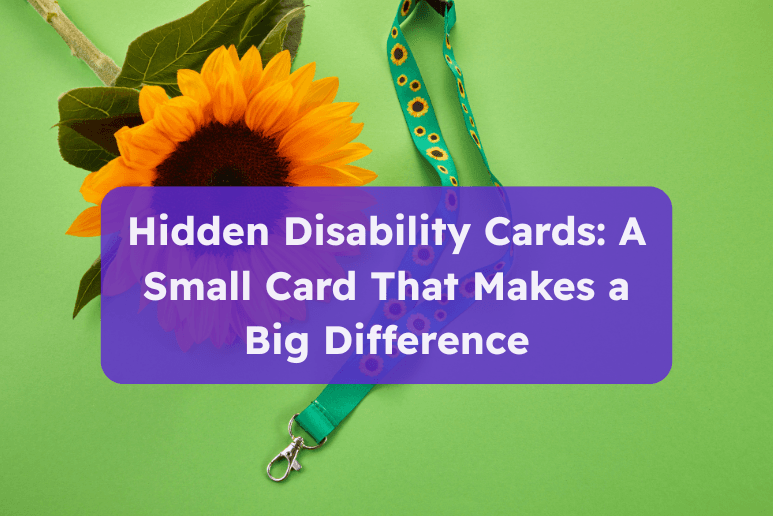
Not every disability can be seen, and I know from personal experience how exhausting it can be to constantly explain yourself to strangers or staff. Hidden disability cards take away some of that pressure. They’re simple, discreet, and surprisingly powerful when it comes to making everyday life that bit easier.
A hidden disability card is exactly what it sounds like — a way to let people know that you might need a little more time, patience, or support, even if they can’t see why. For so many of us living with hidden conditions, we don’t ask for special treatment — we simply want understanding without having to justify ourselves every single time.
I often think of it as a confidence booster. Whether you’re at a busy train station, in a shop queue, or even just grabbing a coffee, being able to quietly show a card can save energy and reduce stress.
Two of the most recognised options out there are the DID card and the Sunflower card:
The good news is that both cards are easy to apply for — you don’t need to go through complicated forms or endless proof.
Both the DID card and the Sunflower lanyard are valuable tools, but they serve slightly different purposes. Here’s how they compare:
Many people ask if they need a hidden disability card for free carer tickets or entry to attractions. The answer is no, because cinemas, events, and venues often accept other forms of proof.
Evidence such as a Blue Badge or a PIP award letter is usually enough. You do not need to buy a hidden disability card to access these benefits.
However, a DID Card can make the process easier because it acts as a recognised form of ID. It saves you from carrying multiple documents and is widely accepted. You can also use a DID Card to join Purpl and unlock discounts on big-name brands and essentials.
The Sunflower lanyard and card do not usually count as proof of eligibility. Instead, they help signal you may need more time, understanding, or support in public spaces. A hidden disability card is helpful but not essential, and it is always your choice which option works best.
For me, what makes these cards so important is that they give you a choice. You don’t always want to share details about your condition with a stranger, and you shouldn’t have to. With a card or lanyard, you can quietly communicate what you need without opening up your whole medical history.
They also:
Honestly, it’s about dignity as much as practicality.
At Purpl, I’m passionate about helping disabled people save money and feel valued. You can use a DID card to sign up to Purpl and starting accessing offers and exclusive discounts for our community. Our members save over £700 a year with discounts on groceries, energy, technology and more. Mention Purpl when buying your DID card and you can get 6 months extra for free.
A hidden disability card or sunflower lanyard might look small, but they make a huge difference when it comes to inclusion and independence. Whether you go for the DID card, the Sunflower card and lanyard, or both, you’re giving yourself one less thing to worry about when the world already asks a lot of you.
And if you’re like me, you’ll find that carrying one isn’t just about convenience — it’s about confidence, peace of mind, and knowing you deserve that little bit of extra understanding.
A hidden disability card is a simple tool that helps you discreetly let others know you may need extra time, support, or understanding. By showing the card, you avoid repeatedly explaining your condition while still accessing the adjustments or kindness you need in shops, venues, or public places.
Anyone living with a disability — visible or hidden — can apply. You don’t need to have a specific type of disability. The card is there for people with conditions that aren’t always obvious, such as autism, chronic pain, hearing loss, mental health challenges, or fatigue-related conditions.
Conditions like autism, ADHD, anxiety, hearing or vision impairments, chronic illnesses, learning disabilities, and many others can qualify. The main point is that your disability isn’t immediately visible but still affects your day-to-day life.
Yes, but it’s straightforward. For example, you can apply online for a DID card by submitting a passport-style photo and basic details. The Sunflower card and lanyard can also be ordered online or picked up free from many airports, supermarkets, or GP practices.
Yes. Both DID cards and Sunflower lanyards are often recognised by staff in transport hubs, including airports, train stations, and bus services. They signal that you may need extra time or support when travelling, and the DID card may also be accepted as proof for free carer tickets in some cases.
Absolutely. The biggest benefit is confidence — knowing you don’t have to keep explaining yourself. A DID card can also be used to sign up to Purpl for access to exclusive discounts, and it can help when applying for free carer tickets at attractions however you don’t need one if you have a blue badge, benefit letter etc.. The Sunflower lanyard increases visibility and awareness in public spaces.
If you lose your DID card, you can request a replacement by contacting the provider directly through their website. For Sunflower cards or lanyards, you can reorder online or ask your local venue (such as an airport or supermarket) for a replacement.
The Sunflower lanyard and card are recognised internationally in airports, transport hubs, and some public venues. The DID card is primarily recognised across the UK, but it may also be helpful when travelling as an extra piece of ID.
The card itself is a conversation starter. Many people use it as a way to quietly raise awareness with staff in shops, travel services, or at events. Wearing a Sunflower lanyard is also a visible reminder that not all disabilities are obvious, which helps promote inclusivity without you having to explain everything.
In addition to hidden disability cards, there are many resources. Charities and support groups offer guidance, while councils and local services often provide schemes such as Blue Badges or free carers’ passes. Purpl also offers discounts for disabled people, and you can join with a DID card to make everyday living more affordable.
Georgina is the founder of Purpl, a platform dedicated to helping disabled people save money through exclusive discounts. Living with Multiple Sclerosis (MS) and ADHD, she understands firsthand the financial challenges of living with a disability. Her mission is to work with brands to secure discounts that ease the cost of essential products, services, and everyday expenses for the disabled community.
As an ambulatory wheelchair user, Georgina knows how it feels to lose independence due to a disability. She is passionate about holistic therapies and diet to manage inflammation and stay as healthy as possible. Her goal is to make Purpl an essential resource for disabled people, offering practical support, advice, and financial relief.
Beyond Purpl, Georgina has a long-term vision to launch a foundation providing grants for disabled people who need extra financial support.
Follow @Purpldiscounts on social media for the latest disability discounts, financial advice, and accessibility resources.
Not Every Disability is Visible – Applying for a Disabled ID (DID) Card
Who Qualifies for an Access Card and How to Apply if You are Disabled
The CEA Card: Benefits for Disabled People & Free Cinema Tickets
How to Apply for Disabled Persons Railcard