
Download the app


© 2026. The Purpl Co Limited. All rights reserved.


Download the app
© 2026. The Purpl Co Limited. All rights reserved.
12 min read
Written by
Georgina, Founder of Purpl
Published on
November 11, 2026
Last reviewed: 11 November 2026
Applies to: England, Scotland and Wales
Written by: Georgina, Founder of Purpl
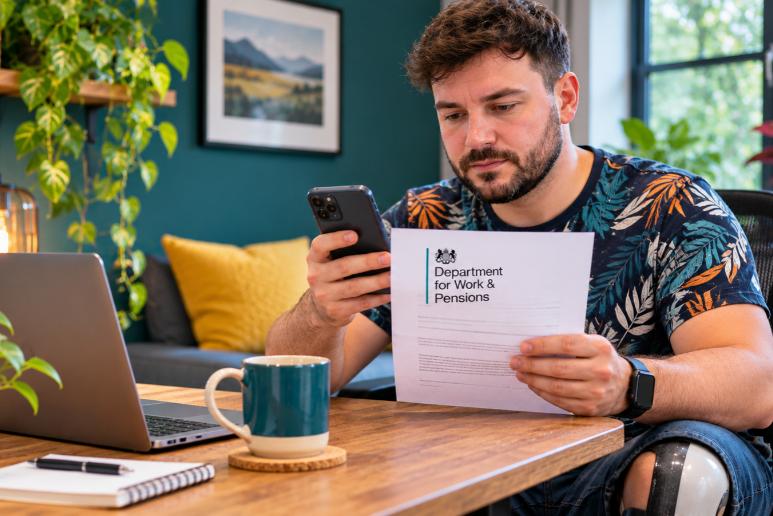
The Department for Work and Pensions (DWP) has confirmed that it has abandoned plans to use Open Banking to check people’s savings when they apply for Universal Credit. However, DWP bank account checks have not been scrapped altogether. A separate system is already being introduced that allows banks to flag accounts where someone may not meet certain benefit rules.
The new Eligibility Verification Measure covers Universal Credit, Pension Credit and New Style Employment and Support Allowance (ESA), but not Personal Independence Payment (PIP), Disability Living Allowance (DLA) or Attendance Allowance.
So, can the DWP still check your bank account without your permission? Can it see what you’re spending? And what happens if you have savings or receive PIP alongside Universal Credit?
Here’s what’s changing, what the DWP can actually see and what it means for your benefits.
If you’re unsure which disability benefits you might qualify for, our Purpl Disability Benefits & Support Handbook brings together benefits, grants and financial support available across the UK.
The Government has abandoned plans to use Open Banking to verify the savings of people applying for Universal Credit.
The proposal would have allowed the DWP to check applicants’ bank account information with their consent, helping identify savings above the benefit’s eligibility limits before payments began.
The change was reported by The Telegraph on 8 November 2026. In a statement provided to the newspaper, a DWP spokesperson confirmed that the previous Open Banking proposal had been abandoned because it relied on claimants giving permission and could not be used for every Universal Credit claim.
Instead, the Government is introducing the Eligibility Verification Measure, which requires banks to identify accounts meeting specified criteria and share relevant information with the DWP.
This means the earlier Open Banking proposal has been abandoned, but DWP bank account checks themselves have not been cancelled.
On 26 October 2026, the DWP confirmed that it had issued its first Eligibility Verification Notice, marking the beginning of its new bank verification system.
The Government expects the measure to save £1.2 billion by 2030/31 by helping identify incorrect benefit payments linked to undeclared savings and time spent abroad.
The official DWP announcement confirms that the system will begin with controlled testing before any wider rollout.
Purpl Insight: Headlines about DWP bank checks being scrapped could understandably reassure people receiving benefits. But the new monitoring system is still going ahead, so it’s important to understand what it can and cannot do.
Yes, but the new rules do not give the DWP unrestricted access to your bank account.
The system is called the Eligibility Verification Measure (EVM), and it works differently from a traditional benefit fraud investigation.
Rather than DWP officials looking through someone’s bank statements, banks check relevant accounts against specific eligibility indicators.
For example, a bank might identify an account where the balance suggests someone receiving Universal Credit has more savings than the normal rules allow.
The bank can then share limited information with the DWP so that staff can decide whether further enquiries are necessary.
The process works like this:
This is not the same as the DWP having direct access to your online banking.
There could also be a perfectly reasonable explanation for an account being flagged. Someone might have received compensation following an injury, a benefit back payment or another sum that should not count towards their normal savings limit.
The Government’s guidance on the Eligibility Verification Measure confirms that a bank flag does not automatically mean wrongdoing. DWP staff must consider the relevant circumstances before making a benefit decision.
Purpl Tip: If you receive a large payment or your savings change, check whether you need to report it. Keeping your benefit information up to date can help prevent problems later.
Not every benefit is included in the new system, and this is particularly important for disabled people who receive more than one type of financial support.
The Eligibility Verification Measure currently covers three benefits.
| Benefit | Included in the new checks? |
|---|---|
| Universal Credit | Yes |
| Pension Credit | Yes |
| New Style ESA | Yes |
| Personal Independence Payment (PIP) | No |
| Disability Living Allowance (DLA) | No |
| Attendance Allowance | No |
| Adult Disability Payment (Scotland) | No |
These are the benefits currently included in the routine verification measure. The DWP has separate investigation powers that may apply in other circumstances.
If you only receive PIP, the new routine Eligibility Verification Measure does not currently apply to that benefit.
PIP is not means-tested, which means your income and savings do not normally affect your entitlement.
You can receive PIP while working, having savings or claiming most other benefits, as confirmed in the official PIP guidance.
However, if you receive PIP alongside Universal Credit, the situation is different.
Your PIP award is not subject to these routine checks, but your Universal Credit claim may be.
For example, someone living with Multiple Sclerosis might receive PIP to help with additional disability-related costs and Universal Credit to support their household income.
Their savings would not normally affect their PIP, but they could affect how much Universal Credit they receive.
In Scotland, Adult Disability Payment has replaced PIP for new claims. It is not currently one of the benefits covered by the DWP’s Eligibility Verification Measure.
New Style ESA is not means-tested in the same way as Universal Credit, so savings do not normally affect entitlement.
However, the new verification system can also identify information relevant to other benefit conditions, including certain periods spent abroad.
This is why New Style ESA appears on the list even though the usual Universal Credit savings limits do not apply to it.
Purpl Insight: Many disabled people receive a combination of benefits. It’s worth checking the rules for each one separately, because savings that don’t affect your PIP could still affect Universal Credit paid alongside it.
One of the biggest concerns about the new powers is whether the DWP will be able to monitor how people spend their money.
The new system does not allow the DWP to see your everyday purchases or access your bank account in real time.
When an account meets an eligibility indicator, banks can share certain details, including:
However, the rules prevent banks from sharing full bank statements, detailed transaction histories, spending habits or specific transaction locations through this measure.
So, if you buy groceries, pay for mobility equipment or spend money on household bills, the DWP cannot see those individual purchases through the routine Eligibility Verification Measure.
The official Code of Practice on Eligibility Verification Notices sets out these restrictions and the safeguards banks must follow when sharing information.
It’s important to distinguish this from a separate investigation. The DWP already has legal powers to request more detailed financial information in certain circumstances.
Purpl Tip: You don’t need to worry that buying something expensive, paying for disability equipment or spending more than usual one month will automatically trigger a flag under the new system. These checks focus on specific benefit eligibility indicators, not what you buy.
That depends on which benefit you receive.
For Universal Credit, savings and other capital can affect both whether you’re eligible and how much you’re paid.
The normal limits are:
| Savings and capital | Effect on Universal Credit |
|---|---|
| £6,000 or less | Normally no reduction |
| More than £6,000, up to £16,000 | Your payments are reduced |
| More than £16,000 | Normally not eligible, although exceptions apply |
If you have more than £6,000 in savings, the DWP normally reduces Universal Credit by £4.35 a month for every £250, or part of £250, above that amount.
For example, if you have £7,000 in savings, your Universal Credit would normally be reduced by £17.40 a month.
The rules consider your relevant savings and capital across accounts, not just the money in your main current account.
If you live with a partner, their savings are normally included too.
The Universal Credit guidance on savings and investments explains what counts as capital, how the limits work and which payments may be disregarded.
This is particularly important for disabled people.
A bank balance doesn’t always explain where someone’s money came from or why they’re holding it.
For example, you might have received a large PIP back payment after an appeal, compensation following an injury or money from a recognised compensation scheme.
Some of these payments have special protections under Universal Credit rules.
Personal injury and illness compensation is normally disregarded for the first 12 months after you receive it. Longer protection can apply when the money is held in a qualifying trust or used to purchase an annuity.
Certain benefit arrears, including qualifying back payments, can also be disregarded for a period. Some special compensation schemes have their own rules.
However, ordinary PIP payments that you haven’t spent can eventually count towards your savings for Universal Credit purposes.
It’s also important to know that simply putting money aside for future disability equipment, home adaptations or medical costs does not automatically mean it is exempt from the savings rules.
The exact treatment depends on where the money came from, when you received it and whether a specific disregard applies.
If you’re unsure, seek independent benefits advice before assuming that a lump sum will or won’t affect your entitlement.
Purpl Insight: Disabled people may need to save for expensive equipment, accessible transport or unexpected care costs. A bank balance alone cannot show whether money should count towards someone’s benefit entitlement, which is why individual circumstances matter.
For many disabled people, financial security isn’t just about having money left at the end of the month.
Living with a disability or long-term health condition can bring additional costs that other households may never have to consider.
That might mean paying more to heat your home, replacing specialist equipment, using accessible transport or covering care and support that isn’t fully funded.
Having some savings can provide reassurance when something unexpected happens.
That’s why I think it’s important that the new bank checks are fair and recognise that people’s financial circumstances aren’t always straightforward.
The Government has a responsibility to make sure benefits are paid correctly, but it also needs to protect people who depend on that support.
For someone already managing a disability, being asked to explain their finances can mean another round of paperwork, evidence gathering and uncertainty.
Even when everything is correct, the process can be stressful.
The safeguards are therefore important. A bank account being flagged should prompt a fair review, not an assumption that someone has done something wrong.
Yes. Receiving disability benefits doesn’t prevent you from using discounts or reducing what you spend on everyday essentials.
If you receive PIP, your savings and income do not normally affect that benefit.
Universal Credit has different rules, but using a supermarket discount, paying less for your energy or getting a reduced price on something you need does not, by itself, mean you’ve broken any benefit rules.
At Purpl, we know how much the extra cost of disability can affect everyday life.
That’s why we work with brands to help disabled people and those living with long-term health conditions save money on groceries, household essentials, shopping, travel and more.
Purpl is a disabled-led savings platform for people with disabilities and long-term health conditions, as well as eligible parents and carers.
You don’t need to receive PIP to become a member. We accept a range of verification documents, including NHS diagnosis letters that meet our requirements.
Members can access savings across everyday spending categories, helping reduce some of the additional costs that come with disability.
Find out if you’re eligible for Purpl
Purpl Insight: Saving money on everyday essentials shouldn’t be difficult. Whether it’s reducing your grocery bill or paying less for something you need because of your disability, small savings can make a meaningful difference over time.
If your bank flags an account under the new system, it doesn’t automatically mean you’ll lose your benefits or face a fraud investigation.
The DWP will review the information and decide whether it needs to ask you anything further.
For example, your account might show savings above the normal Universal Credit limit because you’ve recently received compensation that should be disregarded.
Or your account might show activity abroad, but you were away for a period permitted under your benefit rules.
The DWP may contact you through your Universal Credit journal, by telephone, letter or text message, depending on how you manage your claim.
If you’re contacted, there are a few things worth doing:
If the DWP decides you’ve received too much benefit, you may be asked to repay an overpayment.
You can normally challenge a benefit decision by requesting a Mandatory Reconsideration, usually within one month of the decision, although late requests may be accepted in some circumstances.
Citizens Advice provides independent guidance about benefits, overpayments and challenging decisions.
Purpl Tip: Keep important benefit letters, compensation documents and financial records somewhere you can easily find them. If the DWP asks you to explain a payment, having the paperwork ready can make the process easier.
Not entirely. The DWP has confirmed that its earlier Open Banking proposal has been abandoned. However, the separate Eligibility Verification Measure is still going ahead, allowing banks to flag accounts that meet certain benefit eligibility indicators.
Yes, in certain circumstances. Under the Eligibility Verification Measure, banks can be required to share limited information about relevant accounts without asking each claimant for permission. Strict rules govern what information can be shared and how it can be used.
Yes, in certain circumstances. Under the Eligibility Verification Measure, banks can be required to share limited information about relevant accounts without asking each claimant for permission. Strict rules govern what information can be shared and how it can be used.
Not through the routine Eligibility Verification Measure. PIP is not currently included in the checks, and banks cannot share everyday spending details under this system. Separate legal powers may apply during an investigation.
If you only receive PIP, the new routine bank verification measure does not currently apply to that benefit. PIP is not means-tested, so your savings and income do not normally affect entitlement. However, the DWP may request financial information under separate legal powers where permitted.
If you only receive PIP, the new routine bank verification measure does not currently apply to that benefit. PIP is not means-tested, so your savings and income do not normally affect entitlement. However, the DWP may request financial information under separate legal powers where permitted.
Yes. Relevant linked accounts can include joint accounts. If you receive Universal Credit, your partner’s savings can also affect your household’s entitlement.
Yes. PIP is not means-tested, so having £10,000 in savings does not normally affect your entitlement. However, if you also receive Universal Credit, those savings could reduce your Universal Credit payments.
If you receive Universal Credit, savings above £16,000 normally mean you’re not eligible, although exceptions and capital disregards apply. A bank flag alone cannot automatically stop your benefits. The DWP must consider the relevant information before making a decision.
The DWP may review your claim and ask for more information. If it decides you’ve been overpaid, you may need to repay some money. If you disagree with the decision, you can normally request a Mandatory Reconsideration and potentially appeal.
The DWP announced its first Eligibility Verification Notice on 26 October 2026. The measure is beginning with a controlled testing phase before any wider rollout.
The headlines suggesting DWP bank account checks have been scrapped don’t tell the whole story.
The Government has abandoned its earlier Open Banking proposal for checking Universal Credit applicants’ savings, but a separate system allowing banks to flag potential eligibility issues is already being introduced.
If you receive Universal Credit, Pension Credit or New Style ESA, the new checks may apply to you. If you receive PIP, DLA or Attendance Allowance alone, those benefits are not currently covered by the routine verification measure.
The important thing to remember is that having savings, receiving a lump sum or having your account flagged does not automatically mean you’ve done anything wrong.
There are rules about which savings count, and some payments have special protections.
For disabled people and those living with long-term health conditions, financial security matters. Any system designed to identify incorrect benefit payments must also recognise the additional costs, changing circumstances and legitimate financial arrangements that can come with disability.
Georgina Colman is the founder of Purpl, a disabled-led platform helping people with disabilities and long-term health conditions save money on everyday essentials.
Living with Multiple Sclerosis since 2003 and diagnosed with ADHD in 2024, Georgina understands first-hand the financial challenges that can come with disability.
She created Purpl to help reduce the extra cost of disability through accessible discounts, practical information and community support.